Aditya-L1 Launch Live Updates: Aditya-L1 has started generating power, solar panels deployed, says Isro
  • News
  • India News
  • Aditya-L1 Launch Live Updates: Aditya-L1 has started generating power, solar panels deployed, says Isro
THE TIMES OF INDIA | Sep 02, 2023, 23:41:09 IST
Comments
Share

Aditya-L1 Launch Live Updates: Aditya-L1 has started generating power, solar panels deployed, says Isro

Aditya L1 Mission Launch Live Updates:After Chandrayaan-3, Isro on Saturday kicked off its mission to the Sun with the successful launch of PSLV-C57 carrying Aditya-L1 spacecraft, India’s first solar space observatory. PSLV lifted off from the second launch pad at the Satish Dhawan Space Centre in Sriharikota at 11.50am. It was PSLV’s 59th flight and 25th mission with an XL configuration. The rocket placed 1,480.7kg Aditya-L1 in a highly eccentric Earth-bound orbit in one of the longest launch missions that lasted 63 minutes. The spacecraft will now begin a four-month journey when it will perform orbital maneuvers by using its Liquid Apogee Motor (LAM) to reach the Sun-Earth Lagrange point L1 -- which is 1.5 million km from the Earth -- in a halo orbit. Stay with TOI for all live updates-
11:02 (IST) Sep 02
Aditya L1 Launch: As Aditya-L1 gets ready for launch, here's a quick weather update
The sky is clear at Sriharikota. Temperature is 33 degree Celsius. The current relative humidity is 33%.
11:01 (IST) Sep 02
Aditya L1 Launch: India's solar mission Countdown on
With around 1hour 47 minutes left for the launch of PSLV-C57 carrying Aditya-L1, India's first solar space observatory, the countdown is on.
10:48 (IST) Sep 02
Aditya L1 Launch: ISRO's Aditya-L1 one of longest PSLV missions ever undertaken
Unlike a regular PSLV launch profile, which places the spacecraft into orbit roughly under 25 minutes from liftoff, Aditya’s separation is projected to happen 63 minutes after the rocket blasts off from the second launch pad in Sriharikota. This will be one of the longest PSLV missions ever undertaken. The February 2021 mission that put Brazil’s Amazonia satellite and 18 others into orbits took more than 1hour and 55 minutes, while the September 2016 mission that put eight satellites into orbits took 2 hours and 15 min utes. Both involved multiple satellites and orbits, unlike Aditya-L1.
10:34 (IST) Sep 02
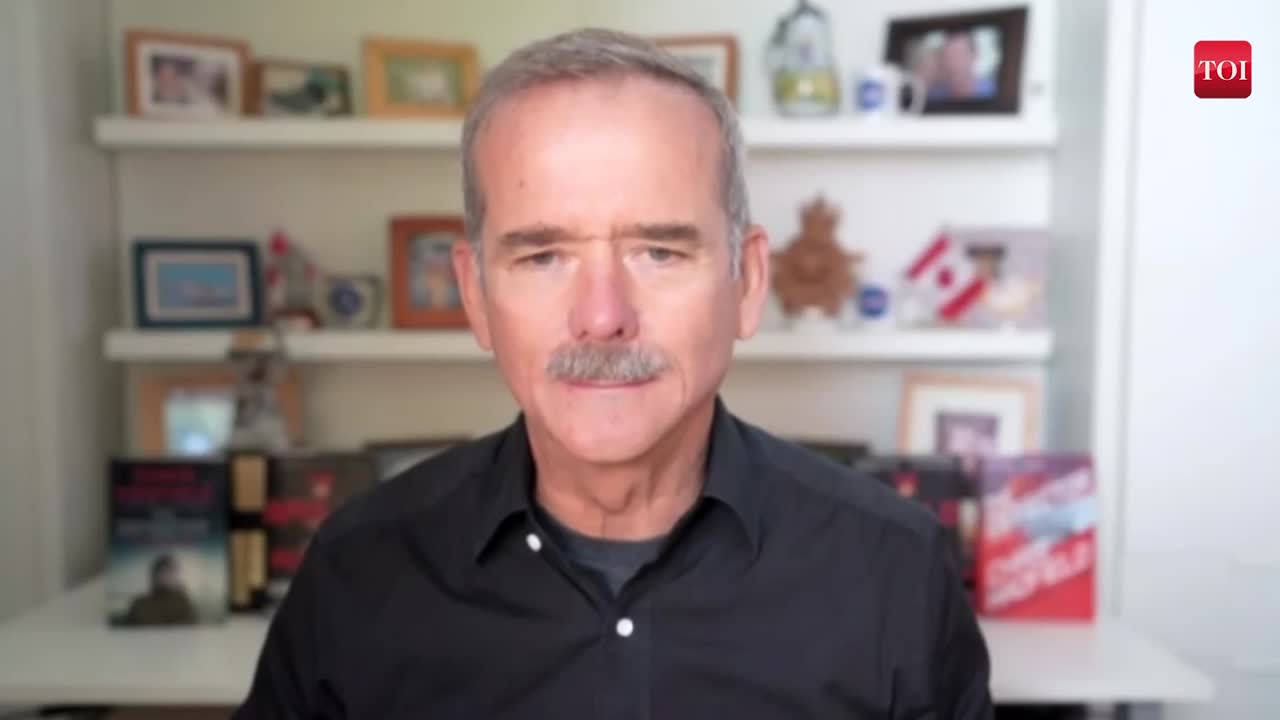
Former ISS Commander Chris Hadfield applauds Aditya L-1 mission for advancing solar research and earth protection
17:49
10:29 (IST) Sep 02
What is Aditya-L1 mission
Aditya in Sanskrit means the Sun. Aditya L1 is the first space-based Indian mission to study the Sun. The satellite will be placed in a halo orbit around the Lagrange point 1 (L1) of the Sun-Earth system, which is about 1.5 million km (about 1% of the Earth-Sun distance) from the Earth. As we know, the Sun is a giant sphere of gas and Aditya-L1 will study the outer atmosphere of the Sun. Aditya-L1 will neither land on the Sun nor approach the Sun any closer. The spacecraft will be directed towards the Sun.
10:21 (IST) Sep 02
Aditya-L1 solar mission: Launch time, where to watch live stream
After landing the Chandrayaan-3 spacecraft on the Moon's south pole, India is now ready to launch its first mission to study the Sun. Called the Aditya L1, this mission is scheduled to launch on Saturday (September 2) at 11.50 am from the Second Launch Pad (SLP) at Satish Dhawan Space Centre, Sriharikota, Andhra Pradesh.
10:04 (IST) Sep 02
Aditya-L1: 4-month-long journey
09:43 (IST) Sep 02
Aditya-L1 is the first space-based observatory class
Aditya-L1 is the first space-based observatory class to study the Sun and is being fired using ISRO's reliable Polar Satellite Launch Vehicle (PSLV) from here at 11.50am.
09:03 (IST) Sep 02
Aditya L1 Launch: With Aditya-L1, India to be among few nations studying Sun
If all goes well with India's Aditya-L1 mission, it will bring India among few countries with probes studying the Sun.
08:33 (IST) Sep 02
Aditya-L1 solar mission: What is Lagrange point, the location from where Isro studies the Sun
If all goes according to plan, Aditya-L1 will enter into a halo orbit around one of five Lagrange points, areas known as parking spots in space because probes can orbit them in a constant pattern while conserving fuel. From there, Aditya-L1 should enjoy an uninterrupted view of the Sun and study in real time its effect on environmental conditions in the vicinity of earth and other planets. That would count India among the countries with probes studying the Sun.
08:27 (IST) Sep 02

All of this space commerce, GPS satellites, weather satellites, telecommunications, exploring the Moon, exploring the Sun, all of that has happened in less than one lifetime. So it's not so much a space race as it is a new space opportunity for everybody. Now the race is really about who can push the technology in an economic way to turn it into profitable space businesses for each of the companies and each of the countries involved. India is in a really strong leveraged position to do that. I think Prime Minister Narendra Modi has seen that for several years. He is very much directly involved with the Indian space and research organization...So it's a really smart move on India's leadership's part right now, to be pushing it, to be developing it, but also being in the process of privatizing it so that the businesses and therefore the Indian people can benefit.

Chris Hadfield, Commander of the International Space Station and author of the Apollo Murders

07:01 (IST) Sep 02
Aditya L1 Mission Launch: Aditya-L1 will be placed in a halo orbit around Lagrangian Point 1 (or L1)
This strategic location will enable Aditya-L1 to continuously observe the sun without being hindered by eclipses or occultation, allowing scientists to study solar activities and their impact on space weather in real-time. Also, the spacecraft's data will help identify the sequence of processes that lead to solar eruptive events and contribute to a deeper understanding of space weather drivers.
06:56 (IST) Sep 02
Aditya-L1 to be live-streamed at Hyderabad's B M Birla Planetarium
The launch of the country's maiden solar mission -- Aditya-L1 will be streamed live at B M Birla Planetarium on Saturday in the city, an official said here. Citizens will get to witness the live streaming (online) of the launch of Aditya-L1 on Saturday in the B M Birla Planetarium. A science talk on the ‘Sun and Aditya-L1 mission’ will also be held, Director of BM Birla Science Centre and Planetarium K G Kumar said on Friday.
06:46 (IST) Sep 02
Aditya-L1 is an important launch, will take 125 days to reach: ISRO chief
As the countdown for India's maiden solar mission Aditya-L1 began on Friday, Indian Space Research Organisation (ISRO) chief S Somanath said that it is an important launch and the satellite will take 125 days to reach the L1 point.
06:40 (IST) Sep 02
Aditya L1 Mission Launch Live: Aditya-L1 will be placed in a halo orbit around Lagrangian Point 1 (or L1), which is 1.5 million km away from the Earth in the direction of the sun. It is expected to cover the distance in four months' time.
06:34 (IST) Sep 02
After the historical landing of the Chandrayaan-3 space craft on the south pole of the Moon, Isro is set to launch its first space venture to study the sun — the Aditya-L1 mission.The mission is scheduled to be launched on September 2 at 11.50 am from Sriharikota in Andhra Pradesh.
06:04 (IST) Sep 02
Isro on Friday entered the last leg of preparations for the 11.50am Saturday launch of Aditya-L1, India’s first solar space observatory mission, after several years of development.
05:29 (IST) Sep 02
Aditya L1 Mission Launch Live: 23 students of Punjab govt schools to witness Aditya L1 launch in Sriharikota
Students of Punjab government schools took a flight from here on Friday to witness the launch event. Punjab School Education minister Harjot Singh Bains said on Friday that the state government will bear all the expenses of the students visiting Sriharikota in Andhra
05:01 (IST) Sep 02
Aditya L1: Study of solar quakes must as they affect geomagnetic field, says IIA scientist
Ahead of India's Aditya-L1 solar mission, a top scientist said the monitoring of the Sun on a 24-hour basis is a must to study solar quakes which can alter the geomagnetic fields of earth. Explaining the need to study the Sun, Professor and In-Charge Scientist at the Indian Institute of Astrophysics (IIA), Dr R Ramesh told PTI that just as there are earthquakes on Earth, there are something called solar quakes - called as Coronal Mass Ejections (CMEs) - on the surface of the Sun.
04:24 (IST) Sep 02
Aditya L1 Launch: The Visible Emission Line Coronagraph (VELC), the primary payload of Aditya L1 -- the first space based Indian mission to study the Sun, set for launch on Saturday -- will be sending 1,440 images per day to the ground station for analysis on reaching the intended orbit.
03:57 (IST) Sep 02
Aditya L1 Solar Mission: By studying the Sun much more about could be learnt aboyt stars in the Milky Way as well as in various other galaxies, ISRO said.
03:57 (IST) Sep 02
Aditya L1 Launch: According to ISRO, there are five Lagrangian points between the Sun and the Earth, and the L1 point in the Halo orbit would provide a greater advantage of continuously viewing the Sun without any occurrence of eclipse.
03:57 (IST) Sep 02
Aditya L1 is designed for providing remote observations of the solar corona and conduct in-situ observations of the solar wind at L1 (Sun-Earth Lagrangian point), which is about 1.5 million kilometres from the Earth.
03:57 (IST) Sep 02
Aditya L1 Solar Mission: The Sun observatory mission will be fired from the second launch pad at this spaceport at 11.50 am on Saturday, and comes close on the heels of India's successful moon expedition last month, Chandrayaan-3.
03:57 (IST) Sep 02
Aditya L1 Mission Launch: The 23.10 hour countdown for the launch of Aditya L1 onboard PSLV C57 commenced from Sriharikota on Friday
03:56 (IST) Sep 02
Aditya L1 Launch Live: Days after landing on the Moon, India will aim for the Sun on Saturday with its maiden solar expedition, as ISRO's trusted PSLV will carry the Aditya L1 mission on a 125-day voyage to the Sun.