Hidden biosphere discovered beneath Atacama Desert, world’s driest desert!
Hidden biosphere discovered beneath Atacama Desert, world’s driest desert!
You're Reading


Synopsis
While microbial life had been previously documented down to depths of 2.6 ft in the Atacama Desert, this newfound biosphere presents a remarkable revelation. Secluded from the surface, this hidden community occupies soils ranging … Read more
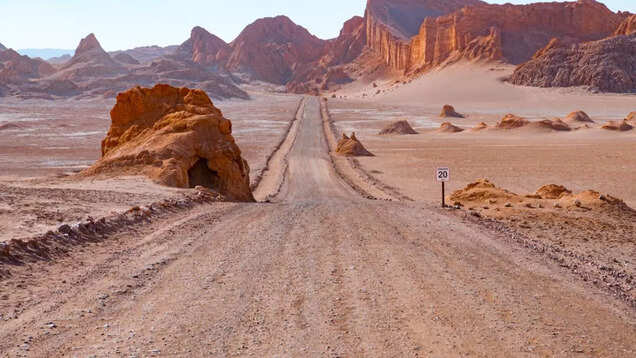
While microbial life had been previously documented down to depths of 2.6 ft in the Atacama Desert, this newfound biosphere presents a remarkable revelation. Secluded from the surface, this hidden community occupies soils ranging from 6.6 ft (2 m) to at least 13 ft deep, showcasing a remarkable resilience to the harsh conditions of their environment.


Read more: Kailasa Temple: A monolithic marvel of Maharashtra
Dominating this subterranean realm are Actinobacteria, a diverse group of bacteria known for thriving in extreme environments, such as the Arctic and boiling hot springs. The presence of these microorganisms in the Atacama Desert's depths indicates the potential for life in seemingly inhospitable environments and offers valuable insights into the search for extraterrestrial life, particularly on Mars.

10 visa-free countries famous for their rich heritage
The researchers also discovered Actinobacteria residing closer to the surface, between depths of 0.8 to 2 in, while deeper excavations revealed the presence of Firmicutes bacteria. These findings highlight the adaptability of microbial life forms to extreme conditions, including high salt concentrations and anaerobic environments.
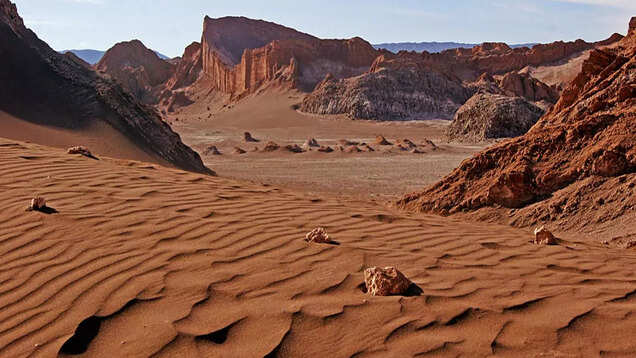
In their quest to understand the desert's biota, the researchers delved more than 4 m deep into the Yungay Valley's playa, employing innovative extraction methods to study living organisms' DNA. Their findings reveal a previously unknown deep biosphere beneath hyper-arid desert soils, potentially extending downwards for an indefinite distance.
Read more: UNESCO World Heritage Sites in India that are like no other in the world
This deep bacterial community's reliance on gypsum for water holds intriguing implications, especially considering Mars' similar geological features. The presence of gypsum deposits on Mars raises great possibilities for microbial life, which further points out to the significance of this discovery in the ongoing exploration of the Red Planet's potential habitability.

closecomments

Be the first one to review.
We have sent you a verification email. To verify, just follow the link in the message
end of article

Visual Stories
10 pretty Indian villages to visit this year-end

8 castles in Germany straight out of a fairy-tale

8 tiger reserves every wildlife enthusiast should visit in India

10 animals that are easily spotted in Ranthambore National Park

How to prepare for a night safari in India?

9 rare animals to spot in the Western Ghats and where to find them



Trending Stories
Why this remote Japanese island keeps going viral–meet the island’s most unusual residents
9 stunning places to visit in Lahaul Valley after crossing the Atal Tunnel in Himachal Pradesh
In photos: The unseen corners of Majuli, the world's largest river island
'Dear Guests From India'; why a Swiss hotel's notice shared by Harsh Goenka is sparking a bigger conversation about travel etiquette
From Python Festival to Nag Panchami; 7 unique snake festivals celebrated around the world and what travellers need to know



Comments (0)