Basilica of San Zeno
Basilica of San Zeno


Synopsis
The Basilica di San Zeno is a small basilica that is known as much for its stunning architecture as it is for the fact that this was the setting for the wedding of Shakespeare's Romeo and Juliet. It is located next to a Benedictin … Read more
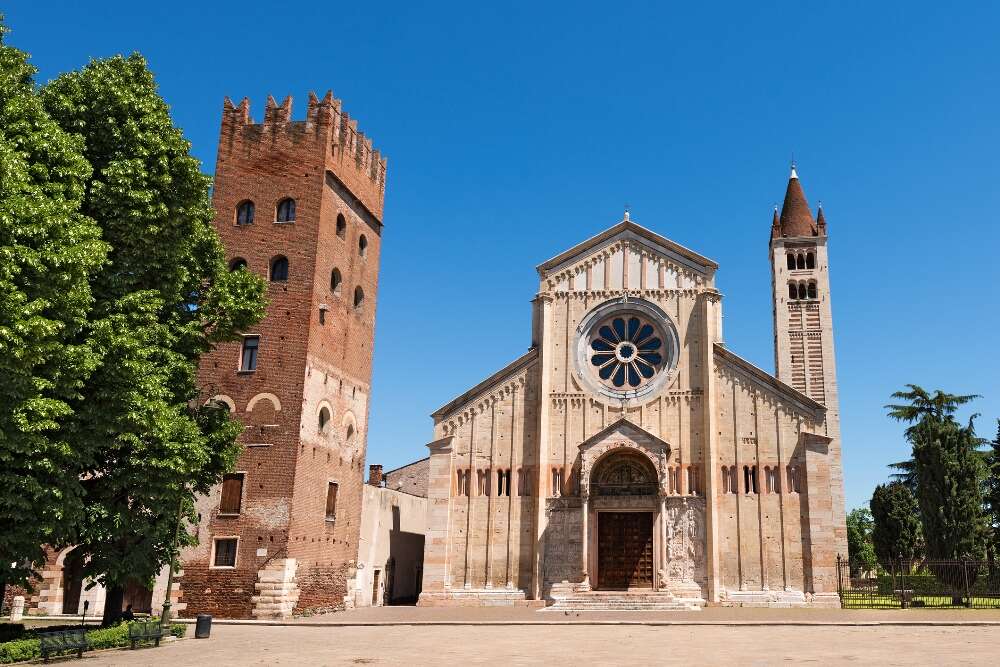
The Basilica di San Zeno is a small basilica that is known as much for its stunning architecture as it is for the fact that this was the setting for the wedding of Shakespeare's Romeo and Juliet. It is located next to a Benedictine abbey, and both places are dedicated to St Zeno of Verona, the city’s patron saint. Legend has it that this was the site of a small church initially and then in the 9th century, the present basilica and the associated monastery were erected. This edifice was damaged in the early part of the 10th century, and consequently went through several renovations. The facade on the outside has a large rose hued window called the Wheel of Fortune. The basilica also has marble bas-reliefs on either side of the porch, bronze doors from the 12th century, bell-tower and the Abbey tower. Apart from this, there are frescoes dating back to the 13th and 14th century on the inside, along with important artworks housed within the beautiful Romanesque facade. Inside the three-aisled basilica, behind the high altar on the left is a smiling statue of Saint San Zeno made from black marble. There is also the famed triptych in the main Gothic chapel, a masterpiece of the Northern Italian Renaissance. The fresco depicting the Crucifixion by Altichiero is of special interest.

closecomments

Be the first one to review.
We have sent you a verification email. To verify, just follow the link in the message
end of article
Next story
Piazza delle Erbe
Visual Stories
10 pretty Indian villages to visit this year-end

8 castles in Germany straight out of a fairy-tale

8 tiger reserves every wildlife enthusiast should visit in India

10 animals that are easily spotted in Ranthambore National Park
How to prepare for a night safari in India?

9 rare animals to spot in the Western Ghats and where to find them


Trending Stories
IMD issues ‘Orange’ alert for heatwave across Central India: What travellers need to know before planning trips
What is Grocery Store Tourism, and why are travellers picking this over traditional sightseeing?
Air travel humour: Husband complains about stolen window seat on flight — air hostess uncovers hilarious truth
Secrets of Kedarnath Temple: 10 fascinating facts every traveller should know
5 India’s most stunning stepwells that feel straight out of a fantasy world



Comments (0)