
- News
- lifestyle
- travel
- adventures
- 9 iconic snakes of India's Western and Eastern Ghats
9 iconic snakes of India's Western and Eastern Ghats
9 iconic snakes of India's Western and Eastern Ghats
The Western and Eastern Ghats are among India's richest landscapes for reptile diversity. Stretching across peninsular India, these mountain ranges shelter everything from giant pythons and king cobras to brilliantly coloured pit vipers found nowhere else on Earth. The Western Ghats, a global biodiversity hotspot, are particularly renowned for their endemic snake species that have evolved in isolation within ancient rainforests. The Eastern Ghats, meanwhile, support a fascinating mix of forest, scrubland, and rocky-hill species adapted to a wide variety of habitats. Together, these mountain systems offer a glimpse into the incredible diversity of India's serpentine world. Here are 9 of the most iconic snakes that call the Ghats home.
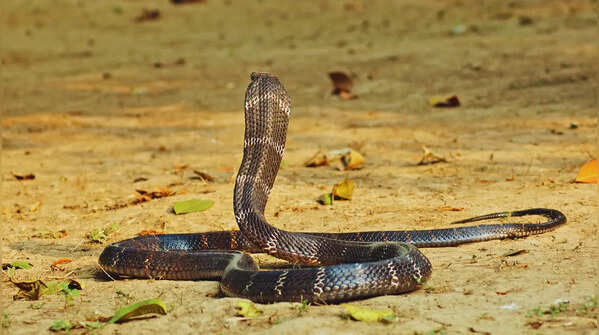
King cobra
No snake commands as much respect as the King Cobra. Reaching lengths of over 5 m, it is the world's longest venomous snake and one of the Western Ghats' most celebrated residents. Unlike most snakes, the King Cobra primarily feeds on other snakes, earning its scientific name Ophiophagus, meaning "snake eater." It is found in the forests of Karnataka, Kerala, Tamil Nadu, and Goa, where it occupies the role of an apex reptilian predator.
Image Credit: Canva
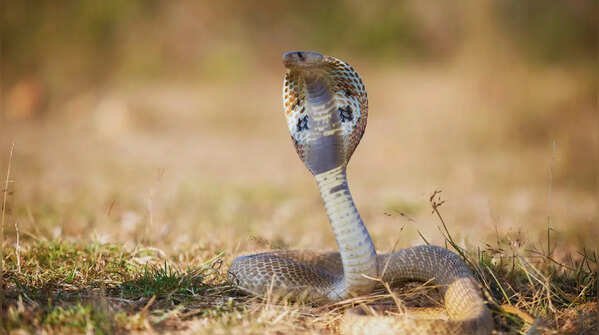
Indian cobra
The Indian cobra is perhaps the most recognisable snake in the country. Famous for its expandable hood and cultural significance, it has been associated with Indian mythology, folklore, and religious traditions for centuries. Although commonly encountered in agricultural landscapes and villages, it also occurs throughout forested regions of both the Western and Eastern Ghats. Its adaptability has helped it thrive across a wide range of habitats.
Image Credit: Canva
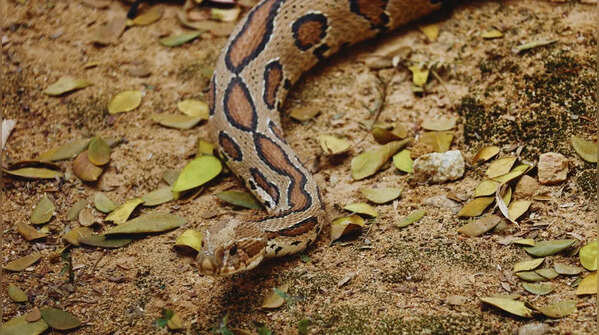
Russell's viper
Heavy-bodied and beautifully patterned, Russell's Viper is among India's most medically significant snakes. It prefers open forests, grasslands, scrublands, and agricultural areas, making it a common sight in parts of the Eastern Ghats. Despite its relatively calm appearance, it possesses one of the most potent venoms among Asian snakes. Its distinctive chain-like markings make it easy to identify.
Image Credit: Canva
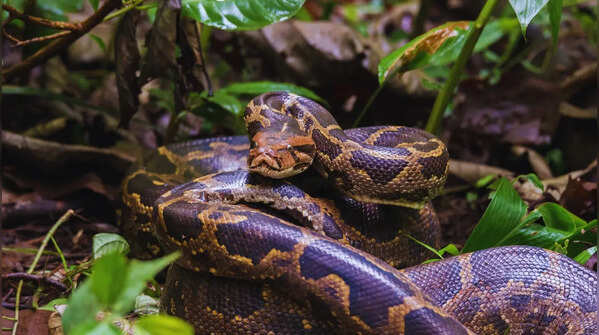
Indian rock python
One of the largest snakes in Asia, the Indian rock python can exceed 3 m in length and occasionally grow much larger. These powerful constrictors inhabit forests, wetlands, rocky hills, and grasslands across the Ghats. Despite their intimidating size, they are non-venomous and rely on strength rather than venom to subdue prey. Their excellent camouflage often allows them to remain undetected in the wild.
Image Credit: Canva
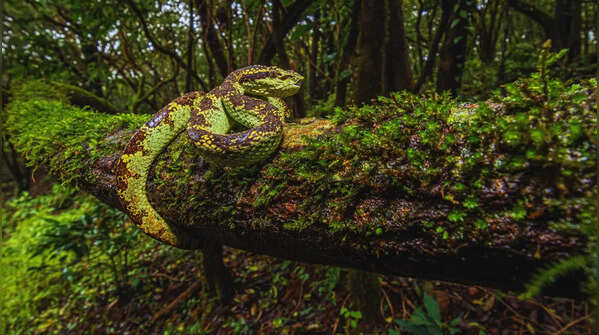
Malabar pit viper
The Malabar pit viper is one of the defining reptiles of the Western Ghats. Endemic to the region, it is especially active during the monsoon months when it can often be found perched along forest trails and streamside vegetation. Individuals occur in a surprising range of colours, including green, brown, yellow, and reddish hues. Its striking appearance has made it a favourite among wildlife photographers.
Image Credit: Canva
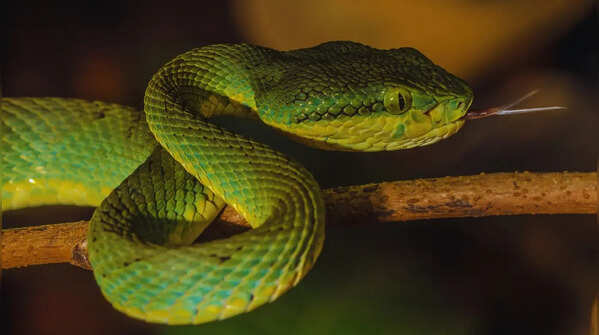
Bamboo pit viper
Slender, bright green, and perfectly adapted to life in the trees, the Bamboo Pit Viper is among the most beautiful snakes found in southern India. It inhabits moist forests in parts of both the Western and Eastern Ghats, where its colouration allows it to disappear among leaves and branches. The species is largely nocturnal and often waits motionless for prey to approach.
Image Credit: Canva
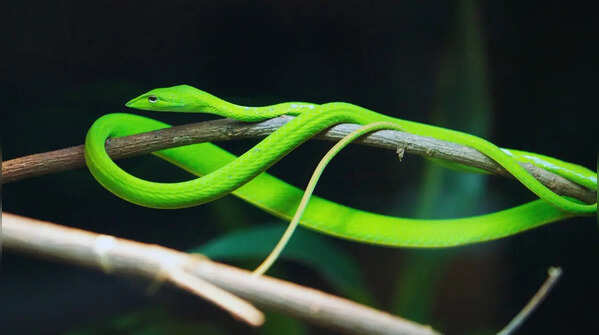
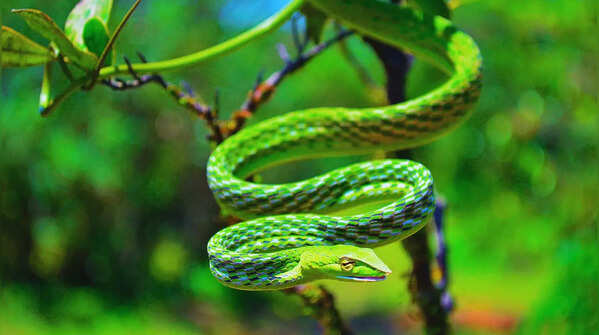
Green vine snake
With its elongated body, pointed snout, and brilliant green colouration, the Green Vine Snake is one of India's most distinctive reptiles. It spends most of its life among shrubs and trees, where it relies on camouflage to ambush lizards and frogs. When threatened, it can flatten its body and reveal a striking black-and-white pattern between its scales, creating an impressive defensive display.
Image Credit: Canva
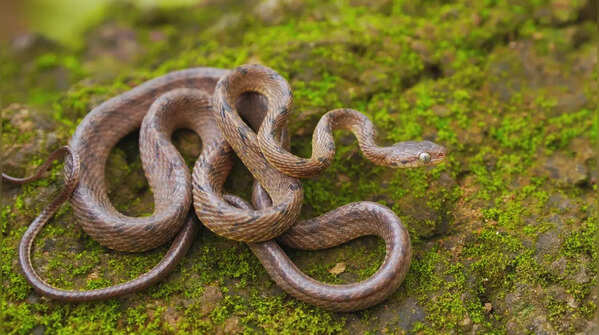
Beddome's cat snake
This rare snake, named after British naturalist Richard Henry Beddome, calls the Western Ghats home and nothing else. Nocturnal and tree-dwelling, it prowls at night for lizards, frogs, and other tiny creatures. Not as well-known as cobras and vipers, but super important to herpetologists since it has a very unique evolutionary history and a restricted habitat range.
Image Credit: Canva
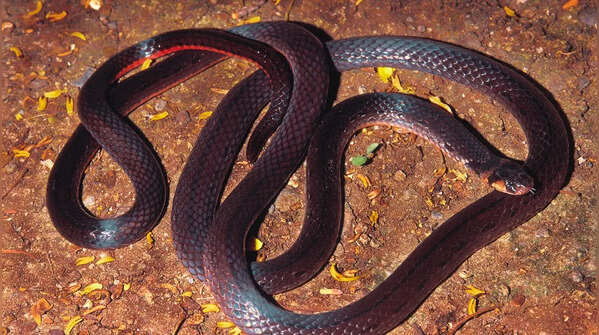
Striped coral snake
That's another hidden gem in the region's snake lineup. With its flashy black and red stripes, it warns predators to stay away. Yet it rarely shows up since it's fossorial and hangs out under leaf litter and soil most of the time. Even so, it's considered one of the region’s most captivating native snakes.
Image Credit: Canva
Featured In lifestyle

