As the news of the death of Iranian-French graphic novelist,
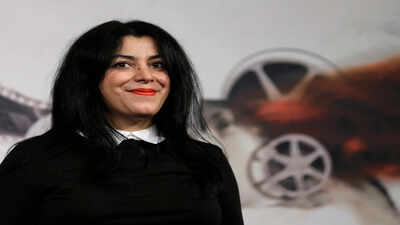
Marjane Satrapi, broke, one particular phrase was constant. And stood out. The 56-year old novelist, rebel, filmmaker, and artist, died of a “broken heart”. Some said “died due to sadness”. Her immense contribution to the world of art and the rebel in her who stood up to bullies till the end were all summarised. But there was something utterly heartbreaking about the phrase “died of a broken heart”. One could say in this regard that Satrapi’s death belonged as much to literature, myth and the world we all carry within us, as it did to the medical diagnosis of a death.
Satrapi, filmmaker and graphic novelist of best-selling,
Persepolis, had been nursing a broken heart for a little over a year. The death of her husband, Swedish filmmaker and producer Mattias Ripa—the love of her life—in April 2025, affected her immensely. She withdrew from public life. And that Satrapi’s family had chosen the phrase “died of sadness” in an age that prefers clinical terminologies, is striking.

Satrapi had been nursing a broken heart after the death of her husband, Swedish filmmaker and producer Mattias Ripa last year.
What exactly is dying of a broken heart?
The phrase immediately evokes the language of tragic novels and ancient myths. But it also points to a reality that both science and human experience increasingly acknowledge: profound grief can be devastating enough to affect the body. Satrapi's death is not just the story of a celebrated artist who lost her partner and went into depression.
It is a story about emotional intensity. It’s a story about our species’ extraordinary capacity to love, something that was inherent in her nature. Possibly the reason why she had said: “Nothing's worse than saying goodbye. It's a little like dying.”
To feel deeply and to empathise is the bedrock of every creator. But at times the same qualities that make certain people remarkable can leave them vulnerable to immense pain. When one looks back at Satrapi's life, a pattern emerges. She was not simply a writer or illustrator. She was someone who felt deeply, loved deeply, rebelled deeply and created deeply. The emotional openness that allowed her to transform personal experiences into universally loved works of art may also have been what made the loss of her husband so devastating.
Born in 1969 in Iran, the Iranian-French artist grew up amid the turbulence of revolution and political upheaval. Her childhood was shaped by the Iranian Revolution, the rise of the Islamic Republic and the repression that followed. Her family members and friends were arrested, persecuted or executed. Her beloved uncle Anoosh, who became one of the most memorable figures in
Persepolis, was executed after being imprisoned as a political dissident. She said in an interview: “At age 10, I was training myself to become a political prisoner.” That horror is what she transformed into her most famous art:
The Complete Persepolis.
As a teenager, Satrapi was sent to Austria by her parents to escape the increasingly restrictive environment in Iran. Though it was a journey intended to keep her away from harm, it added more trauma. She experienced loneliness, cultural displacement, instability and even homelessness before eventually returning to Iran. Later, at around 22, she would move out and settle permanently in Europe. All these experiences became the foundation of
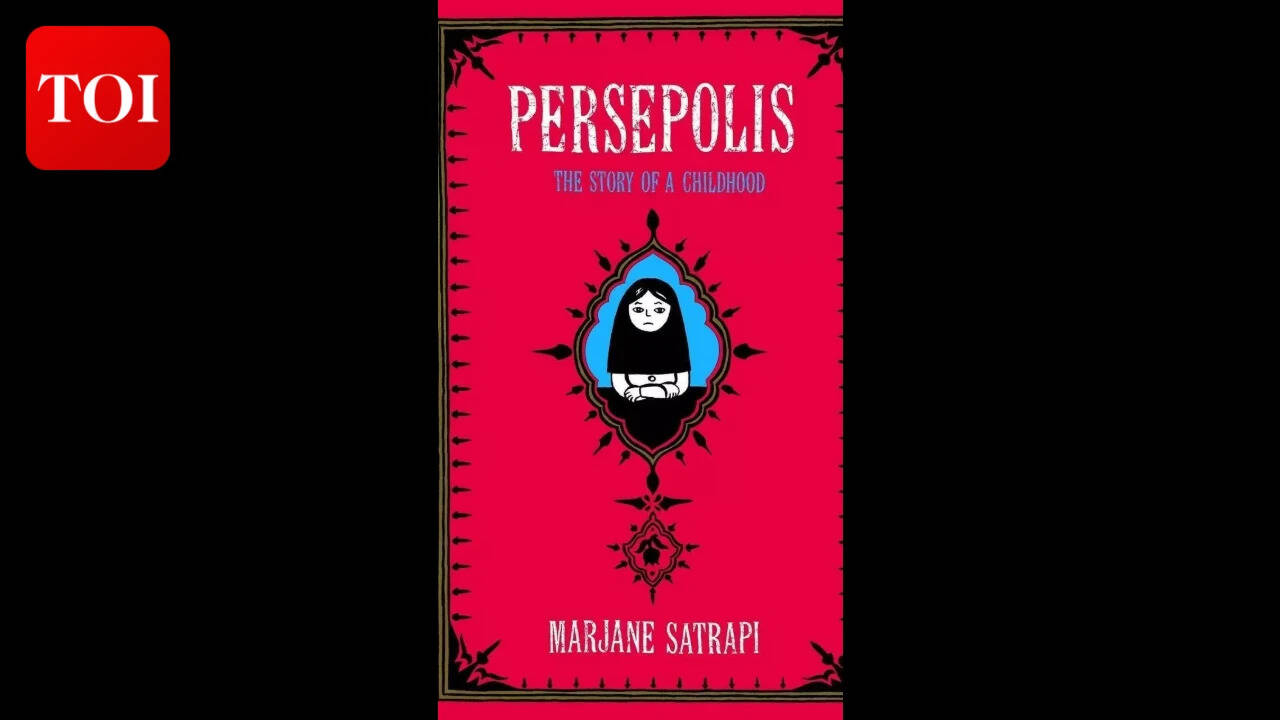
Persepolis: The Story of a Childhood and
Persepolis 2: The Story of a Return, the groundbreaking graphic memoir that transformed how readers around the world understood Iran, exile and identity. Persepolis literally means "The city of the Persians".
Published between 2000 and 2003,
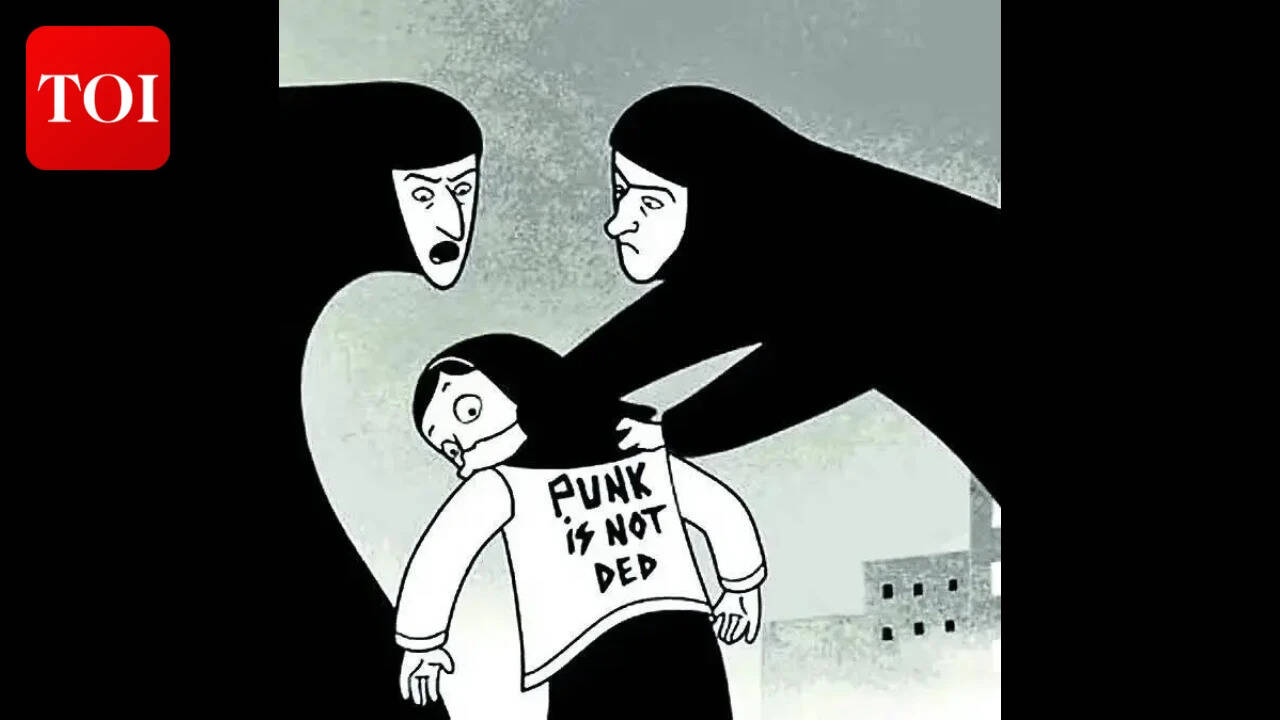
The Complete Persepolis was revolutionary because of its emotional honesty. Satrapi wrote about political repression, adolescence, shame, longing, confusion and rebellion with a directness that made readers feel as if they were living those experiences alongside her. The work later became an internationally acclaimed animated film that she co-directed, cementing her reputation as one of the most important graphic storytellers of her generation.
Published between 2000 and 2003, The Complete Persepolis was revolutionary because of its emotional honesty.
Yet
Persepolis represented only one dimension of her creative achievement. Throughout her career, Satrapi repeatedly returned to themes of love, loss, family, mortality and resilience. In
Embroideries, she explored the intimate emotional worlds of Iranian women. In
Chicken with Plums, she examined grief, regret and the mysterious relationship between heartbreak and death. We will come back to this book again because of the eerie similarity of what she depicted in this particular book and her own life.
Through films such as
The Voices and later
Dear Paris, she continued to investigate the complexities of human relationships and the fragility of life itself. What united all her work was a profound emotional curiosity. Satrapi was never interested in presenting people as symbols or political abstractions. She was interested in their inner lives. “If you have a little sensibility or a heart, you have all the reason to be depressed once in a while. But the depression is like a motor for creation. I need a little bit of depression, a bit of acid in my stomach, to be able to create. When I'm happy, I just want to dance,” she had said.
Even when she was writing about revolutions and governments, she focused on how history entered kitchens, bedrooms, friendships and marriages. Her stories resonated as she understood that the largest political events ultimately become meaningful through personal relationships.
That sensitivity also fuelled her lifelong resistance to authoritarianism. Satrapi was a dissident and a critic of religious extremism. You can feel her anger reading her interviews and reading her graphic novels. She wrote in
Persipolis: “When we're afraid, we lose all sense of analysis and reflection. Our fear paralyzes us. Besides, fear has always been the driving force behind all dictators' repression.”
But at the core of her activism was love. She loved freedom enough to defend it, and loved individuality enough to resist systems that sought to suppress it. She loved Iran enough to criticise what had happened to it, and though she had a French citizenship, she maintained throughout her living life that she was first and foremost, an Iranian. Her emotional force is often mistaken as cynicism. But I’d like to call it longing. Longing for the home she had to leave.
The same capacity that enables people to care deeply about causes, communities and principles also enables them to form profound bonds with other human beings. By all accounts, her husband Ripa was one of those bonds in Satrapi's life. The two married in 1996 and remained together for nearly three decades. Their relationship extended beyond marriage into creative collaboration. Ripa worked alongside Satrapi on various film projects and played an active role in her artistic world. Their lives became deeply intertwined, not only personally but professionally.
A scene from the film, Persepolis, adapted from Satrapi's semi-biographical graphic novel.
When Ripa died in April 2025 at the age of 53, something fundamental shifted within Satrapi. Friends and observers noted her withdrawal from public life. Her social media presence, once vibrant with political and artistic commentary, was largely erased and replaced by a simple tribute to her husband. In an attempt to honour his memory, she established the Mattias and Marjane Ripa-Satrapi Cinema Foundation to support international film students studying in Paris. Yet even this act of legacy-building carried the unmistakable weight of mourning.
For many people, grief is not simply the loss of a companion. It is the loss of a witness to one's life. Long-term partners become custodians of memory. They remember stories that nobody else remembers. When such a person dies, the bereaved individual does not simply lose someone they love. They lose part of the world through which they understand themselves.
Researchers have long documented what is known as the “widowhood effect”: a measurable increase in mortality risk among surviving spouses, particularly during the months and years immediately following bereavement. While emotional suffering is often treated as separate from physical illness, the two are deeply interconnected.
One of the most striking examples of this connection is a condition known as Takotsubo cardiomyopathy, more commonly referred to as broken heart syndrome. First identified in Japan, the condition occurs when severe emotional distress triggers a sudden surge of stress hormones that temporarily weaken the heart muscle. Patients can experience chest pain, shortness of breath and symptoms that closely resemble a heart attack. In severe cases, the condition can prove fatal.
Takotsubo cardiomyopathy confirms something that literature, philosophy and lived experience have long suggested. The human heart is not merely a metaphorical centre of emotion. Emotional life leaves physical traces. Love affects the nervous system, hormonal balance, sleep, immunity and cardiovascular health. Grief, particularly profound grief, can become a physiological event. Whether or not Satrapi experienced such a condition is ultimately less important than what her family's statement conveyed. By saying she died of sadness, they were pointing toward a truth that science increasingly recognises: devastating loss can reshape the body as well as the mind.
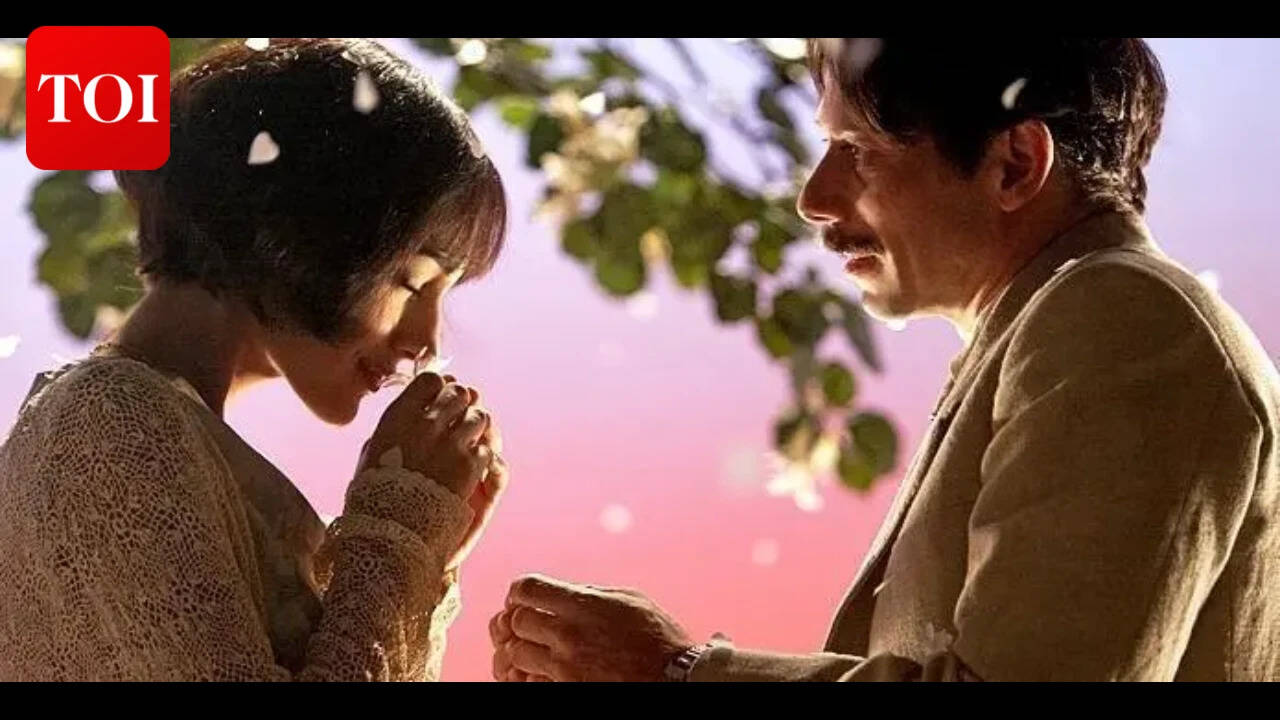
A scene from the film, Chicken with Plums, adapted from Satrapi's novel of the same name.
What makes Satrapi's death even more haunting is that she spent much of her career exploring exactly this territory. Among all her works,
Chicken with Plums now appears almost eerily prophetic. Published in 2004, and later adapted into a film co-directed with Ripa, the story follows the final days of Nasser-Ali Khan (Satrapi’s uncle), a musician who effectively loses the will to live after the destruction of his beloved violin. As the narrative unfolds, readers discover that the real wound lies elsewhere. The violin symbolises a deeper heartbreak rooted in lost love, regret and the collapse of meaning. Nasser-Ali retreats from the world and slowly surrenders to death, convinced that the emotional force sustaining his life has disappeared.
The novel, as heartbreaking as it is, was not really about death – more the intimate relationship between love and survival. Satrapi understood that human beings do not live on biological processes alone. They also live on purpose, attachment, hope and connection. Viewed in hindsight, there is a painful symmetry between her art and her final chapter. The woman who spent decades chronicling loss, exile, heartbreak and mortality eventually became part of the story she had spent her life examining. But reducing Satrapi's life to tragedy would be an insult.
Her legacy extends far beyond the circumstances of her death. She expanded the possibilities of graphic literature. She challenged stereotypes about Iran and Iranian women. She transformed personal memory into political testimony. Most importantly, she reminded audiences that history is not experienced through ideologies alone but through human relationships. Satrapi never stopped believing in the significance of individual stories – the small moments in life that tell the biggest stories beautifully. She understood that revolutions affect families and politics affects friendships and personal relationships.
Contemporary culture has the habit of celebrating resilience and emotional detachment. Satrapi embodied something different. She remained open to the world despite its cruelties, and cared deeply despite all the disappointments. She continued to love despite tremendous loss. She had said: “My culture comes from everywhere. I'm sick of this notion of nationality, that if you're brought up in the same city or same country you're the same. Even three kids brought up in the same family with the same genes, they are not the same. Just consider a human a human.”
It's her humanity that gave the world extraordinary art. That is what makes Satrapi's death feel less like a celebrity obituary and more like an ancient tragedy.