- News
- lifestyle
- home-garden
- Inland Taipan changes colour with the seasons: Inside the strange and dramatic seasonal color change explained
Inland Taipan changes colour with the seasons: Inside the strange and dramatic seasonal color change explained
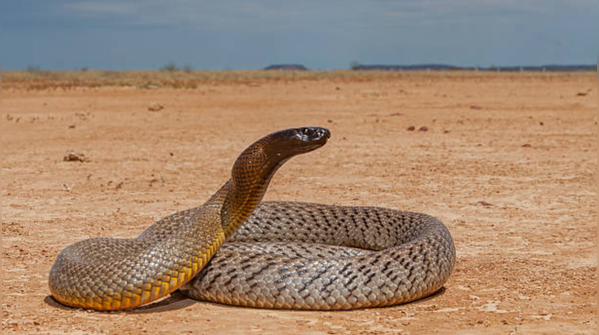
The beautiful adaption skill of the world’s venomous snake
The inland taipan ranked the most venomous snake on Earth has quietly evolved one of the most elegant biological tricks in the animal kingdom: a slow, seasonal shift in skin pigmentation that functions as its own personal thermostat.
Most people, when they hear "inland taipan," only register the venom. But the colour story is genuinely strange, and it deserves more attention. “Dramatic seasonal colour changes take place, with a darker winter and lighter summer coloration,” the Australian Reptile Park says.
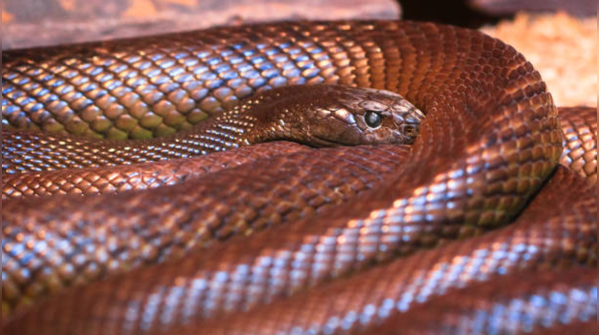
What actually happens to the skin
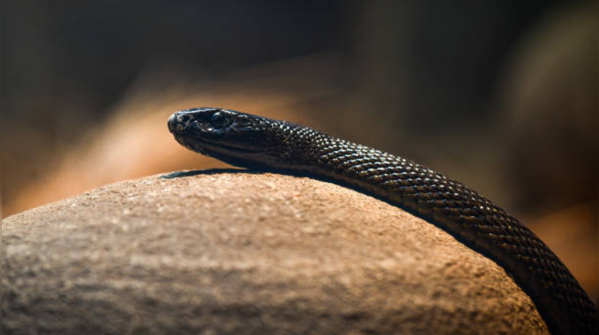
Colour changes seasonally, with snakes becoming darker in winter and fading to lighter tones in summer. Many of the dorsal scales carry a blackish-brown lower anterior edge, creating a broken herringbone pattern along the length of the body. In winter, the head in particular can take on an almost glossy black appearance. Then, over the warmer months, that darkness gradually retreats, the snake fades back toward pale browns and straw-yellows.
Why does it happen?
The dark winter colouration absorbs more heat from the sun when temperatures are cooler, while the lighter summer colouration tends to reflect, rather than absorb, solar energy. This is the Thermal Melanism Hypothesis. Skin colour variation in ectotherms is often a consequence of changes in melanin, the pigment responsible for body darkness. In reptiles, only the deepest pigment cell layer produces melanin, and the darkness of the skin is mostly a result of the production or dispersion of pigment by melanophores.
What does this mean for inland taipan?
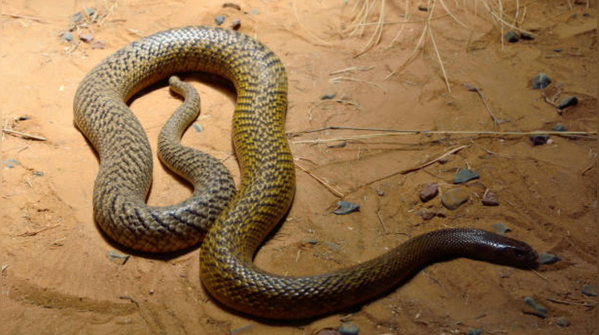
What this means for the taipan in practical terms: in winter, when the outback mornings are cold and every minute of basking counts, a near-black body warms up faster. Darkening in cooler seasons increases heat gain during brief basking windows in arid environments. And in summer, when shade temperatures can push past 40°C and the sun is genuinely dangerous, a pale body slows down the heat absorption that would otherwise send the snake's core temperature into a lethal spiral.
The Australian Museum, one of the country's most authoritative sources on native fauna, notes that the inland taipan is a medium to large snake with a robust build and a deep, rectangular-shaped head, and that the head and neck are several to many shades darker than the body, a gradient that makes sense when you consider that the head is usually angled toward the sun during basking while the body stays partially sheltered in a soil crack.
And there's one more layer. In captivity, the related coastal taipan changes colour with the seasons, becoming a bright coppery colour in summer and dull brown in winter.
Featured In lifestyle

MORE FROM ETIMES
life & style