- News
- lifestyle
- travel
- destinations
- From Snake Island to North Sentinel Island; 10 mysterious places around the world travellers can never visit
From Snake Island to North Sentinel Island; 10 mysterious places around the world travellers can never visit
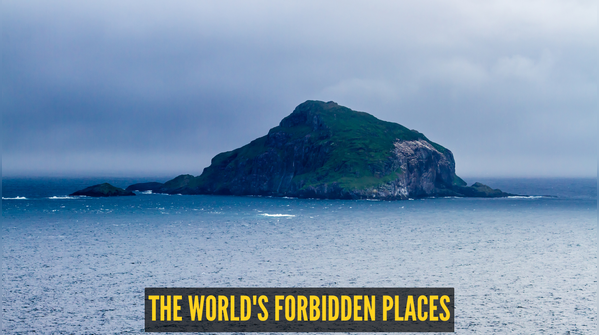
From Snake Island to North Sentinel Island; 10 mysterious places around the world travellers can never visit
In our hyper-connected era, where jumping on a flight to almost anywhere is not a big deal, it's tempting to think the whole globe is fully accessible. Yet, dotted around the planet are specific zones that remain strictly out of reach. Some are heavily guarded by military personnel or cloaked in government secrecy, while others are barricaded to shield vulnerable ecosystems, ancient traditions, or quite literally, to save lives.
Because you simply can't go there, these forbidden spots arise intense fascination. Their sheer inaccessibility feeds an endless loop of myths, conspiracy theories, and bucket-list fantasies. Would you believe? This has birthed an entirely new niche of tourism, people travelling as close to the perimeter as legally possible, fully aware they'll never actually cross the line.
Here is a look at ten of the globe's most captivating restricted areas.
Image Credit: Canva
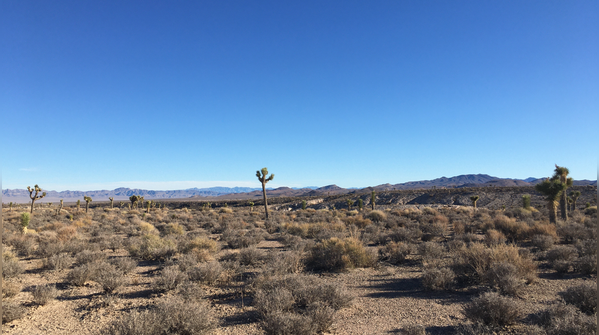
Area 51, United States
Situated in the Nevada desert, this is the most off-limits site in the world. Rooted in the Cold War era, this area has been a testing ground for military aircrafts and defence systems.
This secrecy and restriction started a wave of rumours, from crashed UFOs and captured alien technology to shady government trials, literally all of them. While there is no hard proof for any of these myths, the place has secured its spot among most mysteriously forbidden places.
Naturally, such tight-lipped secrecy birthed a tidal wave of rumours, everything from crashed UFOs and captured alien tech to shady government trials. While these wild claims lack hard proof, they've successfully cemented the base's legendary status.
Can you visit? Not at all. The area is fiercely protected, and crossing the line could land you with hefty fines or a stint in detention. That said, plenty of travellers cruise down Nevada's "Extraterrestrial Highway," stopping at nearby vantage points to soak up the eerie, barren landscape bordering the base.
Image Credit: Canva
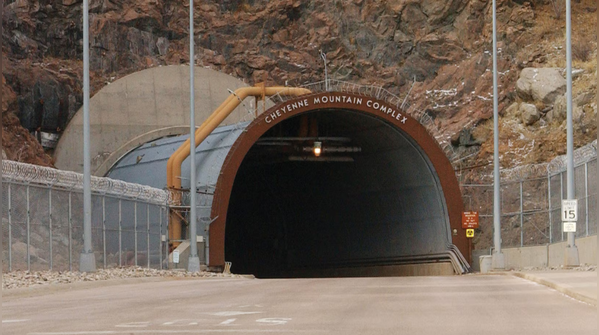
Cheyenne Mountain Complex, United States
Carved straight into the belly of a solid granite mountain in Colorado sits one of the most impenetrable military installations ever conceived. Built at the height of the Cold War, the Cheyenne Mountain Complex was purposefully engineered to withstand a direct nuclear strike while keeping subterranean military operations ticking over.
Can you visit? No. The inner workings are strictly closed to the general public. You can, however, roam the surrounding Cheyenne Mountain region, state parks and hiking trails in the area offer fantastic views of the very peak that conceals this top-secret fortress.
Image Credit: norad.mil
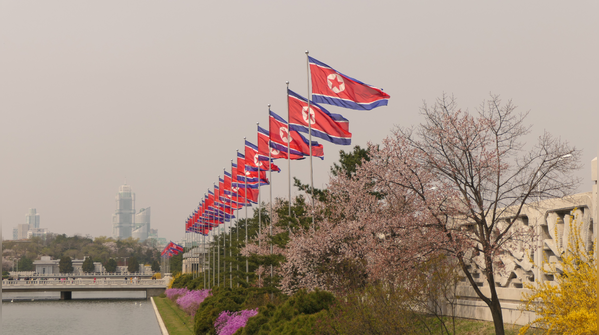
Room 39, North Korea
In stark contrast to remote islands or mountain bunkers, Room 39 is a highly clandestine government department believed to be operating right out of central Pyongyang.
For decades, international analysts have tied this shadowy office to the North Korean regime's relentless push to rake in foreign currency, allegedly utilising a sprawling web of global businesses and covert financial schemes. Given its ultra-sensitive remit, concrete facts are still not uncovered.
Can you visit? Absolutely not. This department is buried deep within a heavily guarded government compound. Even when tourists do manage to enter North Korea, they are kept on a very tight leash, only permitted to view meticulously vetted, state-approved sigh
Image Credit: Canva
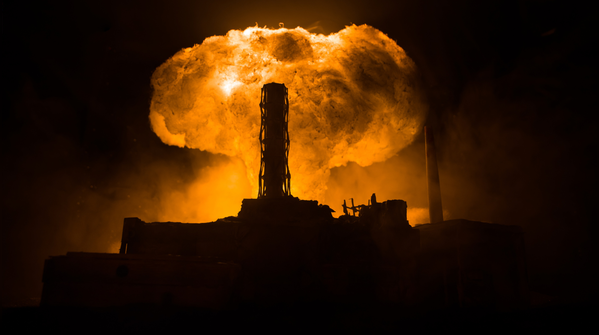
The Elephant's Foot, Ukraine
Lurking in the ruined Chernobyl Nuclear Power Plant it is one of the deadliest man-made objects in existence. Dubbed the 'Elephant's Foot', it is a gigantic, solidified mass of highly radioactive material that melted down during the catastrophic 1986 disaster.
Upon its initial discovery, merely sharing a room with it for a few minutes would deliver a fatal dose of radiation. While the radioactivity has waned slightly over the decades, it remains an incredibly lethal hazard.
Can you visit? No. The mass is permanently entombed inside the reactor's structure, completely cut off from the outside world. Curious travellers can, however, join officially sanctioned tours to view designated areas of the wider Chernobyl Exclusion Zone, provided access is currently granted.
Image Credit: Canva

Snake Island, Brazil
More formally known as Ilha da Queimada Grande, this tiny outcrop off the Brazilian coastline boasts one of the most terrifying concentrations of venomous snakes anywhere on Earth.
The island serves as the sole natural sanctuary for the critically endangered golden lancehead viper. Cut off from the South American mainland for millennia, these serpents evolved an exceptionally potent venom tailored specifically to snatch birds right out of the sky.
Can you visit? No. The Brazilian government outright bans any public landings. Aside from a handful of scientists and strictly authorised personnel, nobody is allowed ashore. You can, however, book certain boat excursions that skirt the coastline, affording a safe, watery vantage point of the deadly island.
Image Credit: Canva
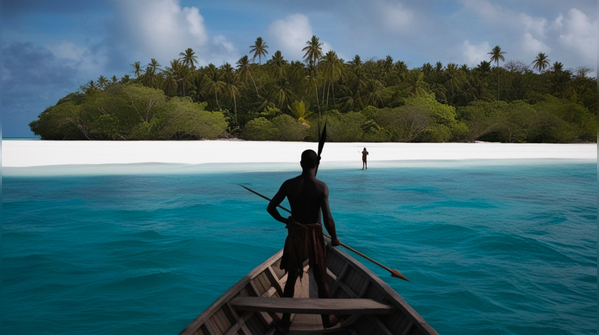
North Sentinel Island, India
In the Andaman and Nicobar archipelago, this island is the home of the Sentinelese, one of the planet’s last remaining uncontacted indigenous people.
This community has thrived in total isolation for thousands of years and has fiercely repelled any attempts at outside contact. Anthropologists warn that even exposure to the most common of modern ailments could completely threaten their survival. Ultimately, the island stands as a stark reminder that some corners of the globe simply aren't meant for holidaymakers.
Can you visit? No. Indian law strictly restricts going anywhere near the island, and breaking the rule can have legal repercussions. To ensure the tribe's protection, the surrounding waters are protected.
Image Credit: Canva
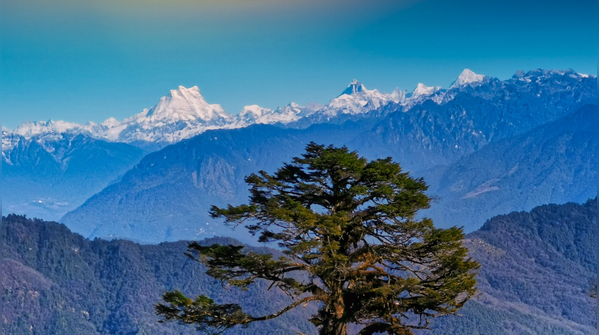
Gangkhar Puensum, Bhutan
Soaring above 7,500 metres, Gangkhar Puensum wears the unique crown of being the world's highest unclimbed peak.
Unlike its well-trodden Himalayan neighbours, it remains entirely pristine, not due to a lack of mountaineering ambition, but rather out of deep respect. Bhutan views its highest summits as sacred ground. Local spiritual traditions dictate that these peaks are the literal homes of protective beings, making any attempt to summit them strictly forbidden.
Can you visit? You certainly can't climb it. Trekkers, however, are welcome to marvel at its breathtaking, snow-capped summit from a distance whilst tackling Bhutan's spectacular trails or viewing it via scenic mountain flights.
Image Credit: Canva
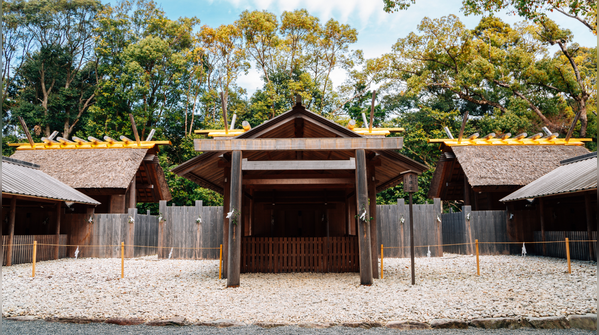
Ise Grand Shrine, Japan
The Ise Grand Shrine beats as the spiritual core of Japan's ancient Shinto religion. Dedicated to the sun goddess Amaterasu, the complex is widely considered the nation's holiest site.
A huge part of its allure stems from what you actually aren't allowed to see. The innermost sanctuary, reputed to house some of Japan's most revered treasures, is exclusively reserved for select priests and senior members of the Imperial family. Furthermore, to honour centuries of craftsmanship, the shrine is painstakingly rebuilt from scratch every 20 years using traditional techniques.
Can you visit? Yes and no. While millions of visitors stroll the outer, forested grounds each year, the most hallowed inner sanctums are kept permanently closed off to the public.
Image Credit: Canva
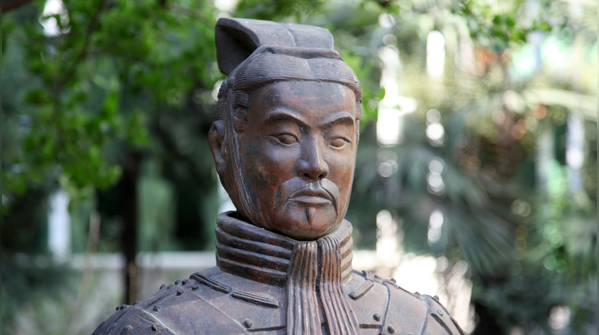
The Tomb of Qin Shi Huang, China
Sitting just outside Xi'an is the sprawling mausoleum of Qin Shi Huang, the first emperor of a unified China. Although the world-famous Terracotta Army draws crowds by the millions, the emperor's central burial chamber remains sealed.
Interestingly, modern studies have flagged abnormally high levels of mercury around the mound. Moreover, today's archaeologists are hesitant to crack it open, fearing that opening the tomb could ruin priceless artefacts before proper preservation technology is available.
Can you visit? You can easily buy a ticket to see the Terracotta Army and wander the massive archaeological complex, but the actual sealed tomb of the emperor is strictly off-limits.
Image Credit: Canva
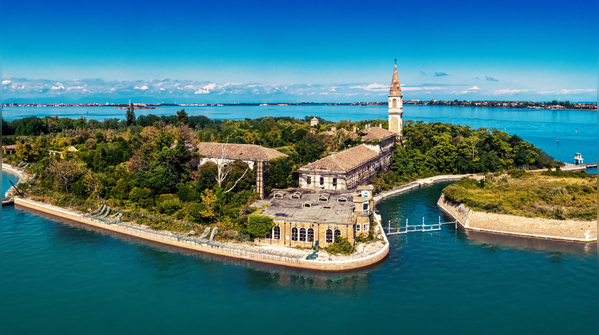
Poveglia Island, Italy
Scarcely any place in Europe has a reputation quite as eerie as Poveglia Island, adrift in the Venetian Lagoon.
Its history includes stints as a quarantine station during plague outbreaks and, much later, a bleak psychiatric hospital. Over the years tales of sufferings, deaths and paranormal activity has made it the most infamous spots in Italy. Whether you buy into the ghost stories or not, its profoundly troubled past continues to curiosity.
Can you visit? As a general rule, no. The island is officially shut off to the public due to collapsing architecture and unstable buildings. Some curious travellers hire boats to watch the ruins from the water, while others foolishly attempt illegal visits, risking fines and a run-in with the authorities.
Image Credit: Canva
Featured In lifestyle

MORE FROM ETIMES
life & style