
- News
- etimes
- animals-pets
- From ponds to oceans: 7 snakes that quietly live in water
From ponds to oceans: 7 snakes that quietly live in water
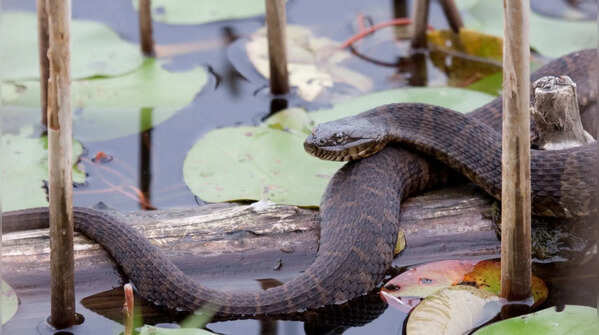
7 snakes that quietly live in water
A snake slipping through still water has a way of freezing the moment. On a roadside bridge, at a village pond, or even during a monsoon drive past flooded fields, people often notice it first and think the same thing – how comfortably it moves where most of us hesitate to even step in.
But not every snake seen in water is “lost” or out of place. Some of them live there. Water is not just a route or a hiding spot for these reptiles; it is where they hunt, rest, and move with ease that land simply cannot offer.
Across continents, from slow-moving rivers to open oceans, several snake species have quietly built their lives around water. And the more you look at them, the clearer it becomes that wetlands, ponds, and even seas are not just fish territory.
Here are seven such snakes that treat water like home.
Images: Canva (for representative purposes only)
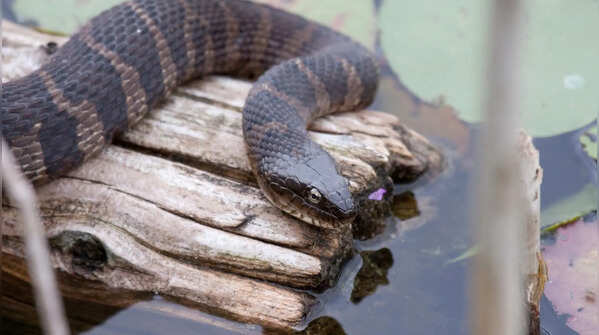
The quiet swimmer often mistaken for something more dangerous
In parts of North America, the Northern water snake is a familiar sight along lakes and riverbanks. It is not uncommon for people to mistake it for a venomous species, especially when it is seen gliding just below the surface or resting on rocks near water.
But its life is far less dramatic than the fear it sometimes triggers. This snake spends much of its time hunting in water, feeding on fish and frogs, and using quick bursts of movement rather than long chases. If disturbed, it can react defensively, but its instinct is usually to slip away into the water and disappear.
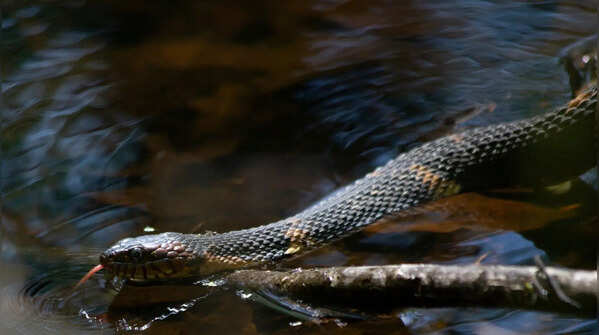
A master of camouflage in swampy waters
Move into marshes and slow wetlands, and the Banded water snake becomes almost invisible.
Its body markings are not just patterns – they work as natural camouflage against muddy banks and floating vegetation. The snake often stays still for long periods, waiting for movement in the water before striking its prey.
In environments where everything blends – reeds, mud, and shallow pools – this stillness becomes its biggest advantage.
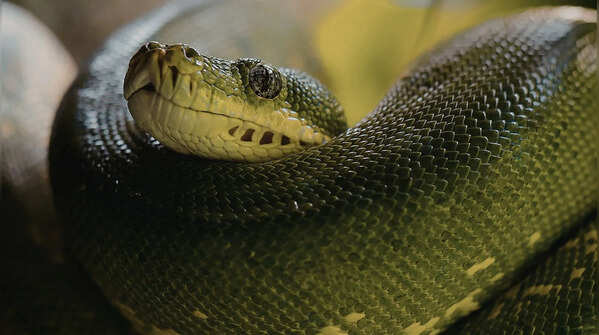
The giant that depends on water more than land
Few snakes change the way people think about reptiles like the Green anaconda.
Found in South America’s flooded forests and swampy basins, it spends a major part of its life in water. On land, its sheer size can make movement slow and heavy. In water, that same body becomes controlled and surprisingly fluid.
What makes it even more fascinating is how little of it needs to be visible. Only the eyes and nostrils sit above the surface while the rest of the body stays submerged, waiting.
A fish hunter that rarely looks away from water
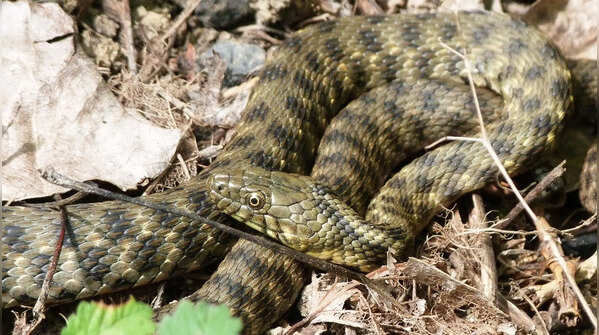
The Dice snake, found across parts of Europe and Asia, has built its entire feeding behaviour around aquatic life.
Unlike many snakes that shift between prey types, this one is closely tied to fish. Rivers, lakes, and reservoirs – these are not just habitats but feeding grounds where it spends most of its active hours.
Its movement underwater is steady and deliberate, built for tracking rather than sudden bursts.
The ocean traveller among snakes
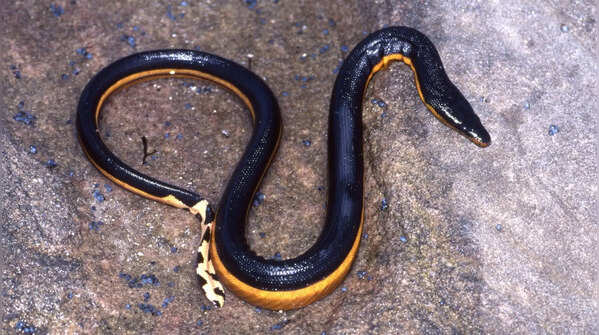
Far from freshwater habitats, the Yellow-bellied sea snake takes aquatic life to another level entirely.
It lives in tropical seas and spends almost its entire life in open water. Land is not part of its routine in any meaningful way.
Its flattened tail acts like a small paddle, helping it move through currents with surprising control. For long stretches, it can drift across vast areas of ocean, surviving entirely in a world without solid ground.
A familiar face in South Asian wetlands
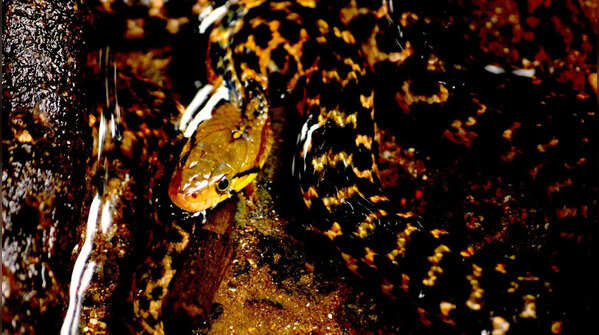
Closer to home, the Checkered keelback is one of the most commonly seen water snakes across ponds, canals, rice fields, and lakes.
It is often misunderstood because of its frequent appearance near human spaces. But its behaviour is straightforward – it hunts where water collects life. Fish, frogs, and small aquatic creatures form its diet, and shallow water gives it easy access to all three.
In many rural and semi-urban landscapes, it quietly plays a role in keeping small aquatic populations in balance.
The unusual one that seems almost designed for water
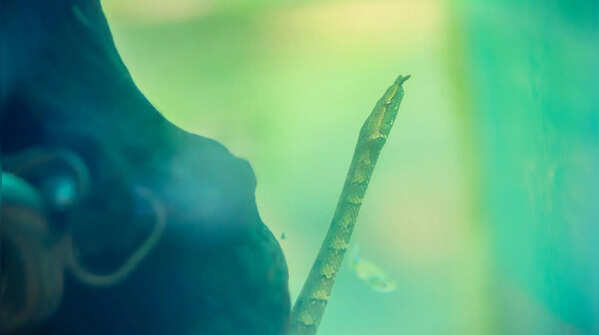
Among all aquatic snakes, the Tentacled snake stands out immediately.
Those small tentacle-like extensions near its snout are not decoration. They are sensory tools that help it detect movement in water, especially in murky conditions where visibility is low.
It spends most of its time submerged, waiting in near-still positions and striking with sudden precision when fish move close.
Disclaimer: This article is based on widely available wildlife information and general species behaviour observed in scientific studies and documented natural history sources. Readers are advised to avoid approaching or disturbing wild snakes in natural habitats.
Featured In etimes

