Temple stairs, inscription from Gupta period discovered in Uttar Pradesh’s Etah
Temple stairs, inscription from Gupta period discovered in Uttar Pradesh’s Etah
You're Reading


Synopsis
In a breakthrough excavation, the Archaeological Survey of India (ASI) has made some priceless discoveries. The ASI has found temple stairs and inscriptions belonging from the Gupta period in Bilsar of Etah district in Uttar Prade … Read more
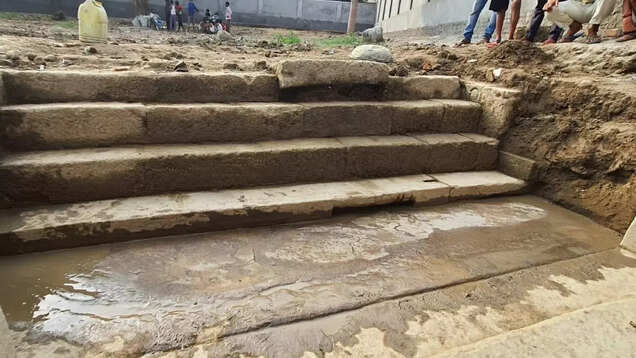
The inscription found here belongs to the 5th century. It possibly says Sri Mahendraditya, who is identified as Kumaragupta of the Gupta dynasty.


ASI took to Twitter and said.
“Breakthrough discovery by @ASIGoI’s Agra Circle - Stairs leading to Gupta period temple were found through scientific cleaning at the protected site of Bilsarh, Etah. An inscription in Shankh lipi on one of the steps, datable to 5th century CE, Gupta period, possibly reading “Sri Mahendraditya..”, identified as Kumargupta of the Gupta dynasty has been unearthed".
Breakthrough discovery by @ASIGoI's Agra Circle - Stairs leading to Gupta period temple were found through scientific cleaning at the protected site of Bilsarh, Etah. @MinOfCultureGoI @kishanreddybjp @KishanReddyOfc pic.twitter.com/ILSDZITVLa
— Archaeological Survey of India (@ASIGoI) September 8, 2021
On Thursday, Vasant Swarnkar, superintending archaeologist of Agra circle, informed that there is a protected site in the village of Bilsad near Aliganj, Etah. The place is said to be the site of a temple built during the Guptas. The team later discovered two pillars during excavation on which there is an inscription about the powerful ruler Kumargupta in sankh lipi (conch script or shell script).
He further said that when they excavated more to know the depth of the two pillars, the team traced a well-finished stair and then three more stairs. It was an indication of the entrance to a temple.

closecomments

Be the first one to review.
We have sent you a verification email. To verify, just follow the link in the message
end of article

Visual Stories
10 pretty Indian villages to visit this year-end

8 castles in Germany straight out of a fairy-tale

8 tiger reserves every wildlife enthusiast should visit in India

10 animals that are easily spotted in Ranthambore National Park
How to prepare for a night safari in India?

9 rare animals to spot in the Western Ghats and where to find them



Trending Stories
5 national parks in the USA perfect for wildlife lovers and the best time to visit them
Where to see the Sleeping Buddha that everyone is talking about? Everything travellers need to know
From Shiva's Kashi to Krishna's Dwarka: 10 Indian cities and their patron deities
India's most significant hills, and why every traveller should visit them
Ravi Bridge reopens: After long months of disruption, Jammu Rail Services are back on track; here's what it means for travellers




Comments (0)