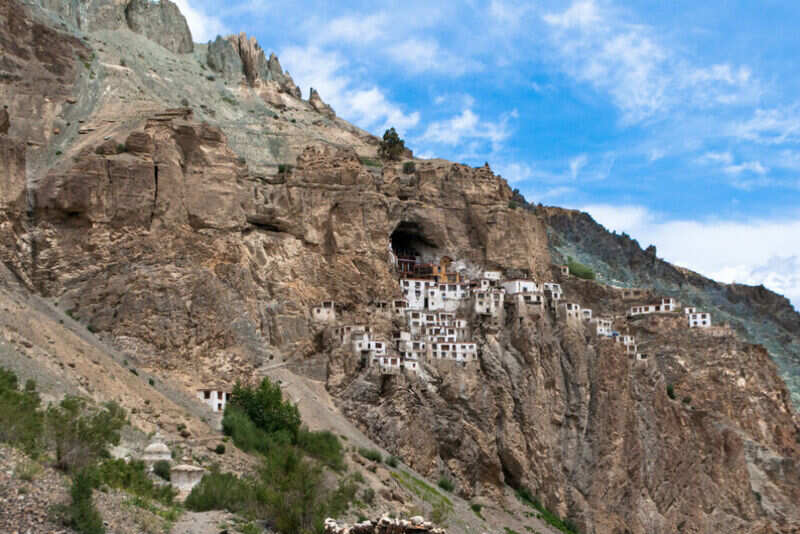
This is the crown jewel of Zanskar and perhaps the most remote monastery in the world, if not only in Zanskar. The cave monastery of Phugtal is said to have been established in 13th century although the style of temple paintings indicate that some may have been made in as early as the 11th century. Phugtal (also Phuktal) belongs to the gelugpa order and also houses a monastic school for students of the entire valley.
It lies in Lungnak valley; the Tsarap Chu river flows beneath this vertical structure. There is no road to Phugtal. After Padum, the road can take you to Raru and from there it is a 6-hour walk to Phugtal Gönpa. It is built literally on top of the river, on a limestone cliff, and appears like a hanging cluster of buildings made of mud and stone. An eternal spring flows inside the monastery and there is a cypress tree on top.
Bodhisattva carvings inside the du-khang are delightfully artistic. Temple paintings and thangkas in Phugtal are said to be identical in style with Alchi and the 10th century monastery of Tabo in Spiti. Just at the base of the monastery is a guest house managed by the monks, which is an excellent place for visitors to stay. It is also well known for Gustor or masked dance festival.

Been There, Done that? Share your Experience!