
- News
- lifestyle
- travel
- destinations
- Uttarakhand's Valley of Flowers is now open for 2026: Everything travellers need to know before visiting
Uttarakhand's Valley of Flowers is now open for 2026: Everything travellers need to know before visiting
Uttarakhand's Valley of Flowers is now open for 2026: Everything travellers need to know before visiting
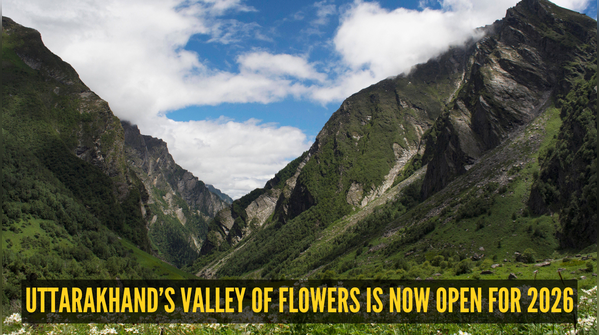
If you have also been waiting to see one of India’s most breathtaking seasonal phenomenons then this is the time to pack your bags. On June 1st, Uttarakhand’s Valley of Flowers National Park officially opened for the 2026 season. After spending months buried under a thick blanket of snow, the alpine meadows are once again welcoming trekkers, photographers, and nature lovers. This UNESCO World Heritage Site usually stays open until early October, giving you a pretty narrow window to experience the landscape that completely transforms once the monsoon hits.
Tucked far away in the Chamoli district of the Garhwal Himalayas, this valley is essentially nature showing off. It's totally off-limits beneath ice and snow for most of the year. But when summer rolls in along with the rains, the whole mountainside springs to life. Hundreds of wildflower species carpet the terrain in bright bursts of purple, white, pink, blue, and yellow. Covering roughly 87 square kilometers at an elevation over 3,600 m, this floral basin is one of India’s most prized natural assets, sitting right inside the larger Nanda Devi Biosphere Reserve.
Here’s a complete guide to the valley:Image Credit: Canva
What makes the Valley of Flowers so special?
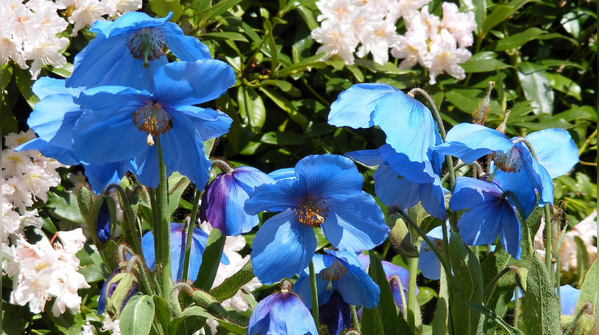
The rare bloom: The main draw here is, undoubtedly, the annual bloom. When the monsoons arrive, the scenery gets draped in vibrant thousands of wildflowers. Researchers have logged hundreds of different plant species in this high-altitude ecosystem, counting quite a few rare Himalayan blooms and medicinal herbs among them.
Some of the rare blooms include:
Himalayan Blue Poppy
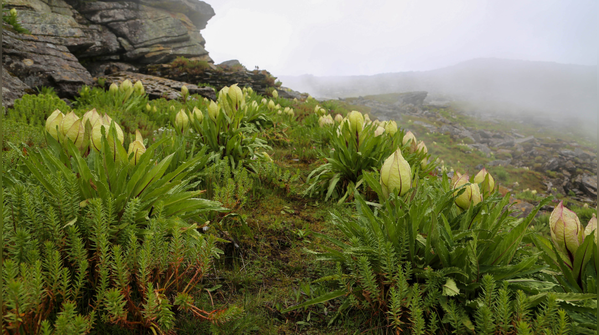
Brahma Kamal
Cobra Lily
Marsh Marigold
OrchidsImage Credit: Canva
Best months to visit
The floral display shifts as the summer progresses. June is all about melting snow giving way to fresh green shoots, while July ushers in the first major wave of blossoms. If you want the absolute peak of color and variety, August is your best bet. By the time September rolls around, the flowers start fading, though the trade-off is much clearer skies and spectacular mountain views.
Image Credit: Canva
Rare wildlife
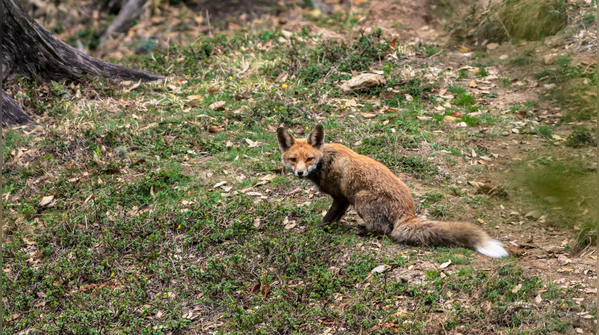
Apart from this, the park acts as a sanctuary for some rare wildlife. Sightings aren't exactly common, but the area is home to red foxes, blue sheep, the Himalayan musk deer, and even the elusive snow leopard.
Image Credit: Canva
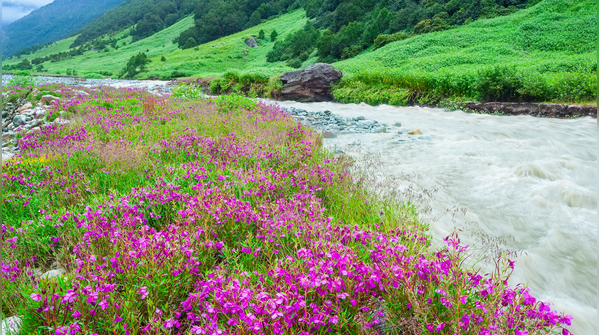
What can travellers experience here?
You don't come to the Valley of Flowers looking for luxury, you come for a deeply raw, nature-driven experience. You can spend hours just wandering through flower-packed meadows, hopping over clear streams, trekking to the spot and soaking up the immense peace of the Himalayas.
If you're a history buff, the valley's backstory is pretty fascinating. It hit the global radar back in 1931 when a British mountaineer named Frank S. Smythe stumbled upon the meadow by pure accident. He was on his way back from a successful climb up Mount Kamet. Utterly blown away by what he saw, he went on to write a book fittingly called The Valley of Flowers, which officially introduced this hidden gem to the rest of the world.
Image Credit: Canva
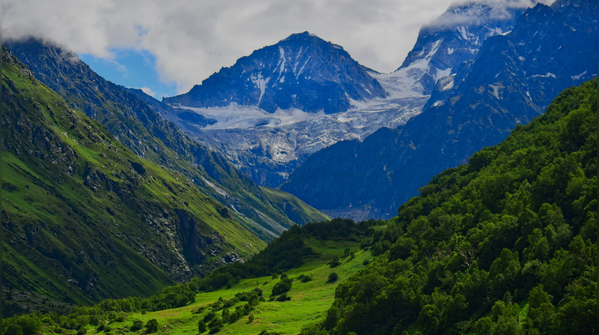
How difficult is the trek
As far as Himalayan trekking goes, this one is rated as moderate. It's totally doable for most reasonably fit travellers and, unlike a lot of high-altitude climbs, you don't need any technical mountaineering skills.
Your journey on foot actually kicks off at Pulna village, which is right near Govindghat. From there, you're looking at a roughly 9-kilometer hike up to Ghangaria, which serves as the main base camp for the valley. The following day, a 4-kilometer trek takes you right into the Valley of Flowers itself.
Most folks wrap up the entire round trip in about three to four days, though plenty of people opt to stick around a bit longer to take it all in without rushing.
Image Credit: Canva
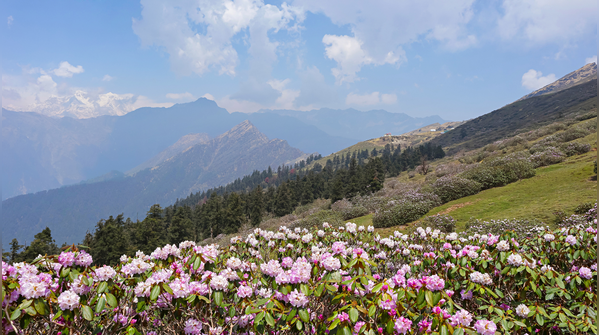
How to reach
By rail: The journey begins in the state of Uttarakhand. If you prefer taking the train, Rishikesh and Haridwar are the closest major railway stations, both have great connections to Delhi and other big cities in the country.
By air: You can catch a flight into Jolly Grant Airport in Dehradun. Then reach Rishikesh, or Haridwar and then Govindghat. It's a gorgeous drive that takes you right past some of the state's most stunning river confluences and mountain backdrops.
From Govindghat, local vehicles are available to Pulna village, which is where your actual hiking route officially begins.
Ghangaria is the last inhabited village on the Valley of Flowers trek route. Trekkers can stay here. Villagers are extremely warm and welcoming to tourists. As per Uttarakhand Tourism website, it is also the last stop where you will find food and water.
Image Credit: Canva
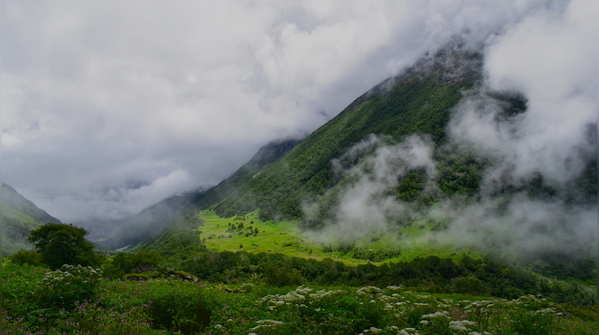
Important things to know before visiting
Permit: Because the Valley of Flowers is a strictly protected national park, you have to get an entry permit.
Timings: You're allowed inside during specific daytime hours. You must hike back out on the very same day, as sleeping inside the park boundaries is prohibited.
Overnight stay not allowed: Overnight stay or camping is not allowed inside the valley. Trekkers need to be back at Ghangaria by 5 PM.
Be monsoon prepared: Keep in mind that monsoon season creates some seriously slick trails. Trekking poles and solid waterproof boots are going to be incredibly helpful here. Don't expect much cell service either, as mobile connectivity is spotty at best along the route. Just mentally prepare yourself for standard, rugged mountain conditions.
Hemkund Sahib: If you have a few extra days, a lot of trekkers bundle this hike with a visit to Hemkund Sahib, a highly revered Sikh pilgrimage site sitting just above Ghangaria. Others head even deeper into the Garhwal Himalayas to check out destinations like Badrinath and the village of Mana.
Situated at an altitude of around 3,600 m, the Valley of Flowers is a dream destination and is now open to tourists.
Image Credit: Canva
Featured In lifestyle

MORE FROM ETIMES
life & style