
- News
- India News
- In 1920, Muslims said they were a nation, not minority: Senior advocate
Trending
This story is from January 31, 2024
In 1920, Muslims said they were a nation, not minority: Senior advocate
Appearing for a petitioner who had successfully challenged 50% reservation for Muslims in AMU in Allahabad HC, senior advocate Rakesh Dwivedi said 'minority' as a concept did not exist during British rule, and it would be presumptuous on the part of the seven-judge bench to describe AMU as a minority institution when it was neither established nor administered by Muslims.
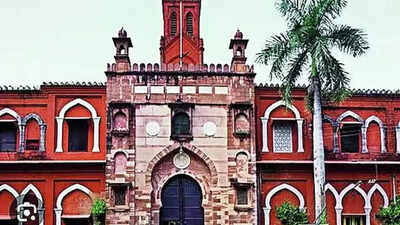
NEW DELHI: Senior advocate Rakesh Dwivedi on Tuesday cited a string of episodes from history to counter Supreme Court's proposition that if Muslims were deemed to be the force behind Aligarh Muslim University in 1920, it could qualify as a minority institution in the post-Constitution era by arguing that Muslims, at that point of time, never considered themselves as a minority but as a 'nation'.
Appearing for a petitioner who had successfully challenged 50% reservation for Muslims in AMU in Allahabad HC, Dwivedi said 'minority' as a concept did not exist during British rule, and it would be presumptuous on the part of the seven-judge bench comprising CJI DY Chandrachud and Justices Sanjiv Khanna, Surya Kant, JB Pardiwala, Dipankar Datta, Manoj Misra and Satish C Sharma to describe AMU as a minority institution when it was neither established nor administered by Muslims.
He said history showed that Muslims neither considered themselves to be a minority when AMU Act was passed in 1920 nor did the British India government categorise them denominationaly. Granting AMU minority status after more than 100 years would endanger its eminence as an institution of national importance, especially when AMU chose not to challenge for more than 40 years the SC's Azeez Basha judgment of 1967, which had adjudged it to be a non-minority institution, Dwivedi said.
"Khan did not consider Muslims to be a minority merely because they were numerically less than Hindus. Khan is considered the father of the two-nation theory, which was later seconded by poet Allama Iqbal at the 1930 Muslim League session in Allahabad, and which was made the basis of the 1940 Lahore Resolution by Mohammed Ali Jinnah. It is this theory of two nations, which emphasised a claim of parity between Hindu India and Muslim India, that led to partition and creation of Pakistan. The theory of two nations does not accommodate the theory of safeguards for a minority," he said.
He said it is also an undeniable historical established fact that from 1935 onwards, AMU teachers and students actively supported the creation of Pakistan as conceived by Jinnah. “When Congress offered safeguards of whatever nature the Muslim league desired, Jinnah retorted that Muslims were a separate nation and not a minority and their resolution for Pakistan was not meant for safeguards but for a separate homeland for Muslims. The British rulers also supported the Theory of Two Nations propounded by Khan and the same was followed by the Muslim League,” the counsel said, and asked, "Given this pre-independence ground situation, could Muslims be considered a minority? Only after the creation of Pakistan did the framers of the Constitution think of giving certain safeguards to Muslims, including Article 30 guaranteeing them the right to establish and administer educational institutions.
Khan, who was a sub-judge in British India government and later became member of the Imperial legislative council, led the movement for establishment of AMU because of his close connection with colonial rulers but despite that the British decided that government would establish and administer AMU set up under a central legislation, he said.
Digging deep into AMU's history, Dwivedi said the Bill for establishment of the university was introduced by Sir Mohd Shafi, the education member in the Imperial legislative council. “He not only introduced the Bill but also moved the motion for reference to a select committee consisting of some British and some Muslim elites like Raja of Mahmoodabad, Shah Nawaz Bhutto (father of Zulfikar Ali Bhutto, former PM of Pakistan) and Nawab Ali Choudhary, Mr. Mohd. Ali and Shafi. They all supported Muslim League and Pakistan,” he said.
Dwivedi said the scheme of the AMU Act denotes a complete departure from the rules and regulations of MAO College, and it is not AMU's case that the scheme of the AMU Act was formulated by them in its essential parts and, hence, it cannot claim that the Muslim Community established AMU.


Appearing for a petitioner who had successfully challenged 50% reservation for Muslims in AMU in Allahabad HC, Dwivedi said 'minority' as a concept did not exist during British rule, and it would be presumptuous on the part of the seven-judge bench comprising CJI DY Chandrachud and Justices Sanjiv Khanna, Surya Kant, JB Pardiwala, Dipankar Datta, Manoj Misra and Satish C Sharma to describe AMU as a minority institution when it was neither established nor administered by Muslims.
He said history showed that Muslims neither considered themselves to be a minority when AMU Act was passed in 1920 nor did the British India government categorise them denominationaly. Granting AMU minority status after more than 100 years would endanger its eminence as an institution of national importance, especially when AMU chose not to challenge for more than 40 years the SC's Azeez Basha judgment of 1967, which had adjudged it to be a non-minority institution, Dwivedi said.
"Sir Syed Ahmad Khan had established Muhammadan Anglo-Oriental (MAO) College, whose foundation was laid by Lord Lytton. Khan considered Muslims to be a separate and distinct nation which had once ruled over India," he said.
"Khan did not consider Muslims to be a minority merely because they were numerically less than Hindus. Khan is considered the father of the two-nation theory, which was later seconded by poet Allama Iqbal at the 1930 Muslim League session in Allahabad, and which was made the basis of the 1940 Lahore Resolution by Mohammed Ali Jinnah. It is this theory of two nations, which emphasised a claim of parity between Hindu India and Muslim India, that led to partition and creation of Pakistan. The theory of two nations does not accommodate the theory of safeguards for a minority," he said.
He said it is also an undeniable historical established fact that from 1935 onwards, AMU teachers and students actively supported the creation of Pakistan as conceived by Jinnah. “When Congress offered safeguards of whatever nature the Muslim league desired, Jinnah retorted that Muslims were a separate nation and not a minority and their resolution for Pakistan was not meant for safeguards but for a separate homeland for Muslims. The British rulers also supported the Theory of Two Nations propounded by Khan and the same was followed by the Muslim League,” the counsel said, and asked, "Given this pre-independence ground situation, could Muslims be considered a minority? Only after the creation of Pakistan did the framers of the Constitution think of giving certain safeguards to Muslims, including Article 30 guaranteeing them the right to establish and administer educational institutions.
Khan, who was a sub-judge in British India government and later became member of the Imperial legislative council, led the movement for establishment of AMU because of his close connection with colonial rulers but despite that the British decided that government would establish and administer AMU set up under a central legislation, he said.
Digging deep into AMU's history, Dwivedi said the Bill for establishment of the university was introduced by Sir Mohd Shafi, the education member in the Imperial legislative council. “He not only introduced the Bill but also moved the motion for reference to a select committee consisting of some British and some Muslim elites like Raja of Mahmoodabad, Shah Nawaz Bhutto (father of Zulfikar Ali Bhutto, former PM of Pakistan) and Nawab Ali Choudhary, Mr. Mohd. Ali and Shafi. They all supported Muslim League and Pakistan,” he said.
Dwivedi said the scheme of the AMU Act denotes a complete departure from the rules and regulations of MAO College, and it is not AMU's case that the scheme of the AMU Act was formulated by them in its essential parts and, hence, it cannot claim that the Muslim Community established AMU.
End of Article
FOLLOW US ON SOCIAL MEDIA









Hot Picks
TOP TRENDING
Trending Stories
In India
Entire Website
- Travis Kelce Net Worth 2024, Current Salary and More
- Jordan Love Luxurious Lifestyle: Expensive Properties, Net Worth, Car Collections and more
- Watching, downloading child pornography are offences under POCSO Act: SC
- Tirupati laddu controversy: Former TTD chairman moves SC, seeks probe into lab report
- EXCLUSIVE | Rohit Sharma to Akash Deep after no-ball drama: 'Aage badh, hota rehta hai'
- Coldplay India tour 2025: Band announces new show in Mumbai; check dates, how to book tickets and more
- Kerala lottery results: Win Win W-788 winners for 23 September 2024; first prize Rs. 75 lakhs, second prize Rs 5 lakhs and third prize Rs. 1 lakh
- Withdrawal symptoms: IMD issues orange alert for Tue
- Without these two players, India can't form a Test playing XI: Kamran Akmal
- Tamil Nadu to develop city's own 'Central Park' on 118 of 160 acres of MRC land
- Badlapur sexual assault case: Accused shot dead after opening fire in police custody
- Success of humanity lies in collective strength, not in battlefield: PM Modi at UNGA
- LIVE: TOI Dialogues Kanpur. Watch Now
- As Sri Lankans swing left, will India get another hostile neighbour?
- In deadliest day since 2006, Israeli strikes kill at least 274 in Lebanon
- 'Grave insult': Atishi's 'Bharat'-like gesture for Kejriwal angers Cong, BJP
- Buy at Rs12K, sell at Rs300K: How Coldplay tickets beat crypto on Sunday
- Google CEO Sundar Pichai on meeting with PM Narendra Modi in the US: He pushed us to continue...
- TN governor says secularism European concept, not needed in India
- 'No victim shaming': Sitharaman clarifies remarks on EY employee's death

Popular Categories
Hot on the Web
Top Trends
Tirupati Laddu ControversyPM Modi US Visit LiveAkash DeepEY Employee DeathRishabh PantIsrael Hezbollah WarVirat KohliAnura Kumara DissanayakeJetblue Flight Emergency LandingRyan RouthAwadhesh PrasadUGC NET ResultBengaluru Mahalakshmi MurderRohit SharmaBadlapur School Sexual Assault CaseShoaib AkhtarLive Cricket Score
Trending Topics
Laapataa LadiesZodiac SignsBigg Boss 18The Great Indian Kapil ShowChia SeedS ShankarOptical IllusionSharp Eye TestChiranjeevis FarmhouseSana KhanDevaraStree 2 CollectionAnupam MittalHealthy RaitasUrvashi RautelaColdplay India tour 2025Best Laptops For CodingPM Narendra ModiAnupam MittalWordle Answer
Living and entertainment
Latest News
EC team in Jharkhand to review poll preparednessElon Musk's SpaceX to send uncrewed Starships to Mars by 2026: “One of my biggest concerns right now..”Ghosts Season 4: Premiere date, plot, and cast revealedMom's everyday tips were a must for golden boy D GukeshYudhra Box Office: Siddhant Chaturvedi starrer earns only Rs 8.60 crore over the weekendKaun Banega Crorepati 16: Amitabh Bachchan praises Ujjwal’s resilience as he attempts the 1 Crore questionOlivia Munn and John Mulaney welcome second daughter via surrogateNaseeruddin Shah, Ratna Pathak Shah bring old world charm to DelhiBigg Boss Tamil 8: VJ Jacquline to participate in the upcoming season?Gen-Z slang words explained: 30 terms you need to knowThe truth about sugar substitutes: Safe alternative or hidden health risk?Kim Jung-nan chooses Song Joong-ki as most appealing actor, praising his care and leadershipDecomposed body of civil services aspirant found in DelhiYour Birth Chart Explained: Unlocking the Secrets of Your Cosmic BlueprintGoogle CEO Sundar Pichai after meeting PM Narendra Modi in US: “He pushed us to continue..”Gemini, Daily Horoscope Today, September 23, 2024: Face financial strain today with expenses outpacing incomeAmid Odisha custody abuse row, Puja held at police station; CCTVs installedBest Time To Upgrade To 4G & 5G Tablets: Lightning-Fast Performance At Unbeatable Prices
Copyright © 2024 Bennett, Coleman & Co. Ltd. All rights reserved. For reprint rights: Times Syndication Service