
- News
- etimes
- animals-pets
- Cat teeth vs Tiger teeth: Inside nature’s two fierce carnivore designs
Cat teeth vs Tiger teeth: Inside nature’s two fierce carnivore designs
Cat teeth vs Tiger teeth: Inside nature’s two fierce carnivore designs
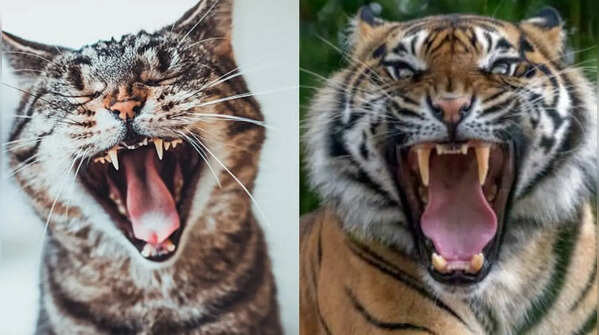
From domestic cats chewing their food to tigers ripping prey into pieces in nature, teeth play a vital role in determining how these animals from the same group survive. Although both animals are from the felid family, their evolution led to key differences in their teeth due to variations in lifestyle and diet. Look at how cat teeth differ from tiger teeth and see how each predator evolved unique dentition to survive in its environment.

The felid family connection
Despite considerable differences in body features, domestic cats and tigers belong to the same biological family known as the felid family. As predators, these creatures have similar dental equipment that consists of canine-like teeth, incisors, and carnassials. Nevertheless, a remarkable distinction exists in the dental features of cats and tigers regarding size and the power needed to consume their prey.

Cat teeth structure
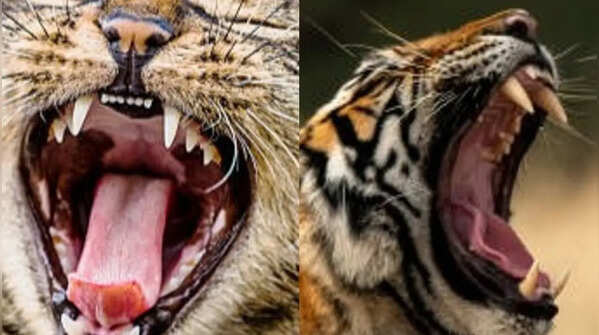
Domestic cats have thirty specialized teeth suitable for hunting smaller creatures. The small size of incisors helps cats groom and clean themselves. At the same time, their canines are utilized to kill small creatures while feeding. Premolars and molars act as scissor-like dental structures responsible for cutting the prey into pieces. Cats have no teeth dedicated to breaking their prey; thus, this process is performed during numerous small bites.

Tiger teeth structure
A tiger has one of the largest dental systems among the felid family members. The creature has fewer but larger teeth when compared to cats. Tigers have canines that can reach a few inches in length and are capable of piercing the flesh of large animals. The carnassials of tigers have a shear-type function, allowing them to slice the skin and muscles of their prey effectively.

Bite force and function differences
One of the primary differences in cats' and tigers' dental systems is represented by their strength. For instance, the bite force of a domestic cat is rather weak when compared to that of tigers. Tigers need high levels of bone-crushing force to eat the prey successfully. Besides, the difference between cats and tigers consists of their ability to attack: while cats use agile and fast attacks, tigers rely on the strength and leverage of their bodies and teeth.

Difference related to the predatory way of survival
There is a direct link between the differences in cat and tiger teeth and predatorial skills. The difference in their dental structure correlates with the way they hunt. Domestic cats are known for attacking their prey quickly; hence, the structure of their dental system allows performing repetitive bites. Tigers are known for their ability to perform a stealth attack and make a killing blow to large prey.
Evolutionary summary
In conclusion, the teeth of domestic cats and tigers demonstrate the process of natural selection in action. The dental structure of cats is adjusted to hunting small prey, which requires agility of actions. Meanwhile, tigers are adjusted to killing bigger animals and, therefore, have large and strong canines capable of tearing the flesh of their prey. Despite differences, both species have similar tooth features: canines, incisors, and carnassials.
Featured In etimes

