- News
- entertainment
- hindi
- bollywood
- Gandhiji inspires Bollywood’s song and dance world!
Trending
This story is from October 2, 2013
Gandhiji inspires Bollywood’s song and dance world!
In the recent years, if there is one person who has inspired Bollwood no end, it is the Mahatma.
Maybe it had more to do with the way the film raked in the moolah, giving more filmmakers dollar-driven, let’s incorporate Gandhiji ideas.

But post 2006, Gandhiji has firmly come out of the one odd photo hanging behind the seats of police officers and judges, and has almost broken into a song and dance in various movies. While there are still very few movies made on the great man per se, Bollywood seems to be loath to let go of the chance to include Gandhiji as a revolutionary omnipresence in films, if the filmmakers can think of some way to it.
And when filmmakers think, can songs be far behind? And so, suddenly, Gandhiji seems to be Bollywood’s most popular, for the want of a better word, songwriter-composer now (Well, the song has always been identified with him!). What with the many versions of a prayer that had once brought tears to a million eyes, Raghupati Raghav Raja Ram, becoming part of filmi soundtracks. And this trademark Gandhi bhajan is no longer just that. It’s a rap, it’s part of a medley, it’s a remix, it’s a refrain, its lyrics are all tod-marod... Hey Ram! If only Gandhiji had thought of copyright laws, we wouldn’t be reading on to what’s below:
In Kuch Kuch Hota Hai (1998)
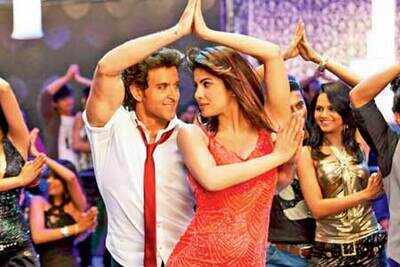
Sung in the film as a medley, a faster remix version that had Raja Ram as a fade-away refrain, and a male voice inserting a high pitched Patita Pavana Sita Ram every time Kajol spotted Shah Rukh and her heart lurched at her college sweetheart approaching her while being jostled by kids jumping around after a flag hoisting ceremony. At least, the lyrics remained original!
In Satyagraha (2013)
Totally, the handiwork of the composer-writer duo Salim and Sulaiman. Catchy song, with the pace increasing to a crescendo. Except for the refrain of
Raghupati Raghav Raja Ram, everything was changed. Uthkar karne hain kuch kaam, Raghupati Raghav Raja Ram went one line, with more such provoking lines rhyming throughout the song (like Ghayal hai bhola insaan). Was this Prakash Jha’s solution to what he called ‘democracy under fire’? Dunno, but the song sure was gen next.
In Zanjeer (2013)
Why a remake of an out-and-out masala film needed this song is something only Apoorva Lakhia can tell us. But the film opened with chants of Raghupati Raghav Raja Ram. Not only that, the song becomes a background score for the violence shown on the screen – which, to begin with, is a first. No one before has ever shown violence choreographed to Gandhiji’s prayer ever before. So when Ram Charan slaps men shouting ‘CM Murdabad’ as Raghupati Raghav Raja Ram plays on, it does slap your sensibilities as well.
In Krrish 3 (yet to be released)
Right on the heels of launching the teaser, came this video with Raghupati Raghav Raja Ram. The veteran Rajesh Roshan’s handiwork, this version has nothing in common to the original, and neither is it used in a ‘revolution’ inspiring manner. The tune is different, set to a party beat, and the lyrics go something like, Raghupati Raghav Raja Ram, non-stop party, aaj ki party, celebrations tere naam. It is almost reminiscent of Radha on the dance floor in the way it is sung. But hang on one sec, do our youngsters really need to be singing Behke huey hain armaan in the same breath as Raghupati Raghav Raja Ram? Well, guess all’s fair in Bollywood’s song and dance world!

About the Author
Jyothi PrabhakarEnd of Article
FOLLOW US ON SOCIAL MEDIA








entertainment videos
Featured In Movies
Popular Categories
Entertainment NewsBollywood NewsTollywood NewsKollywood NewsMollywood NewsMovie ReviewsLatest Hindi MoviesLatest Tamil MoviesMX PlayerParenting TipsHome RemediesWeight LossBeauty TipsParenting TipsHindi VideosHindi Video SongsBhojpuri Music VideosLatest Telugu MoviesBhojpuri Music VideoHindi TV News
Trending in Entertainment
Latest MoviesBollywood MoviesHollywood MoviesTamil Movies 2024Telugu Movies 2024Malayalam Movies 2024Kannada Movies 2024Marathi Movies 2024Bengali Movies 2024Top Rated Movies 2024Best Hindi MoviesBest English MoviesBest Telugu MoviesBest Tamil MoviesBest Malayalam MoviesBest Kannada MoviesBest Bengali MoviesUpcoming Hindi MoviesBest Movies Of All TimeBest Hindi Movies of All Time
Trending in Etimes
Horoscope TodayNumerology Predictions TodayKamala HarrisMarcellus WilliamsVivek RamaswamyElon MuskAnna Paulina LunaChappell RoanGhost Shark SpeciesRyan RouthDonald TrumpLaurene Powell JobsKamala HarrisSituationship TipsMagnesium DeficiencyRelationship TipsSean Diddy CombsAlzheimers DiseaseJennifer Lopez
Trending in TV
Trending in Lifestyle
Trending in Regional
Movie Reviews
Yudhra ReviewJo Tera Hai Woh Mera Hai ReviewKahan Shuru Kahan Khatam ReviewHis Three Daughters ReviewNever Let Go ReviewDancing Village: The Curse Begins ReviewTransformers One ReviewFirst Love ReviewBerlin ReviewThe Buckingham Murders ReviewSpeak No Evil ReviewVisfot ReviewThalapathy Is The G.O.A.T ReviewRebel Ridge Review
Upcoming Hindi Movies
Upcoming Regional Movies
Latest News
BJP is ending reservation by ending permanent jobs, government education, says HoodaMountaineers scaled unclimbed high peak, names it 'Tsangyang Gyatso Peak’ after Sixth Dalai LamaKaun Banega Crorepati Season 16: Amitabh Bachchan recalls the shooting of 'Sara Zamana' from Yaarana; says 'I was getting electric shocks'Why do kangaroos box and drown predators?‘Yek Number’ trailer launch: Aamir Khan, Raj Thackeray, Rajkumar Hirani and Sajid Nadiadwala grace the eventIndia urges citizens to avoid travel to Lebanon amid escalating tensionsKerala lottery results: Karunya Plus KN-540 winners for 26 September 2024; first prize Rs. 80 lakhs, second prize Rs 10 lakh and third prize Rs. 1 lakhLeo, Daily Horoscope Today, September 26, 2024: Positive developments are expected in love lifeChennaiyin FC eye second win on the trot in Indian Super LeagueChina conducts rare publicised test launch of ICBMVijay Deverakonda extends best wishes to Jr NTR’s 'Devara' team head of releaseRobert Kraft acquires signed Tom Brady rookie card for a whopping $120,000 at auctionRam Charan's 'Game Changer' new single promo to be out of THIS date“I’m just taking every day, I can’t control” - WWE Star Big E's Return UpdateJanel Grant’s lawyer says Mr. McMahon Netflix docuseries only “scratches the surface” of his personalityMammootty and Vinayakan starrer goes on floors in NagercoilHeavy rain floods Chennai roads, disrupt traffic, and cause power outagesGujarat schoolboy Drona Desai scores 498 in Under-19 tournament
Other Group Sites -
ETimes is an Entertainment, TV & Lifestyle industrys promotional website and carries advertorials and native advertising.